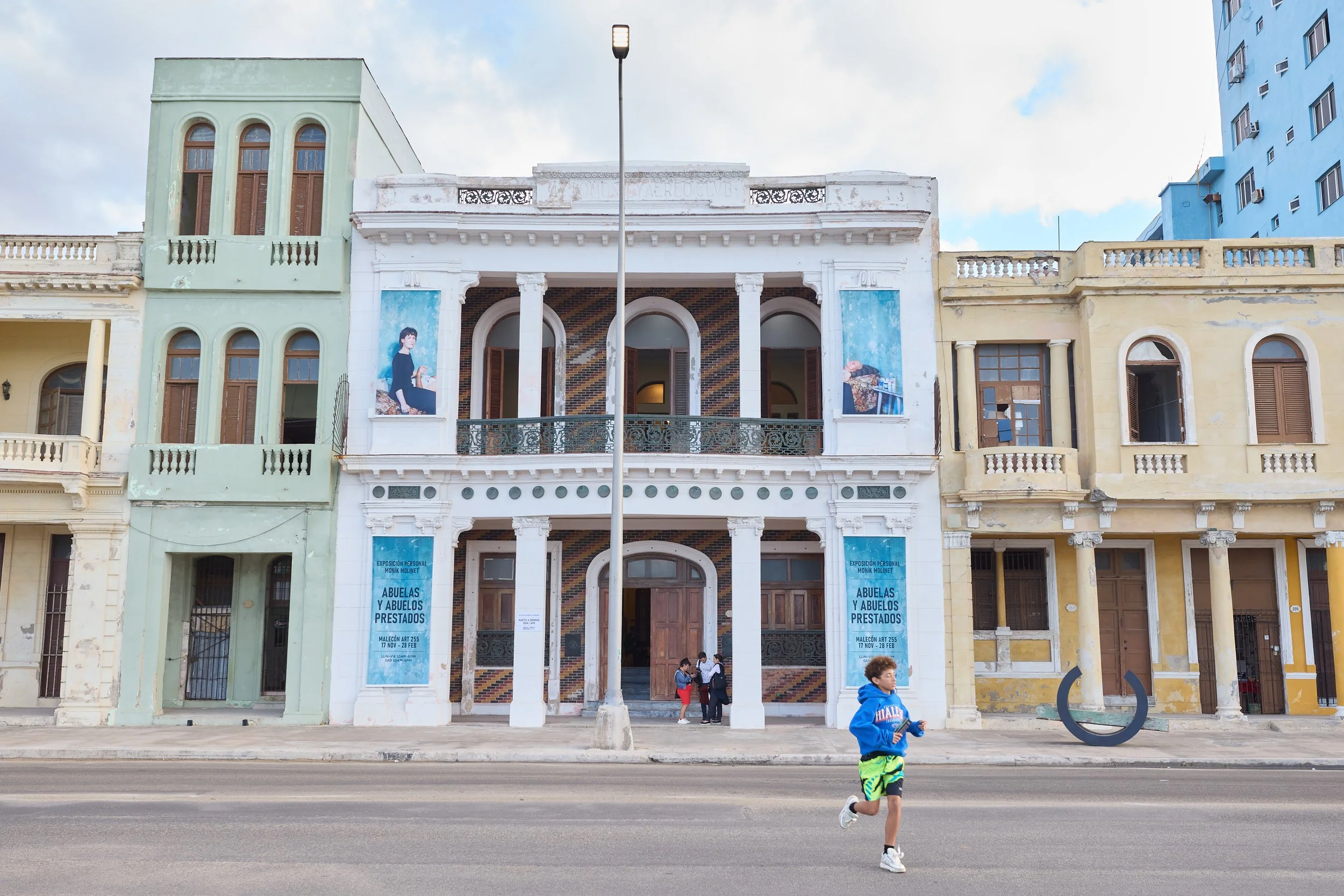
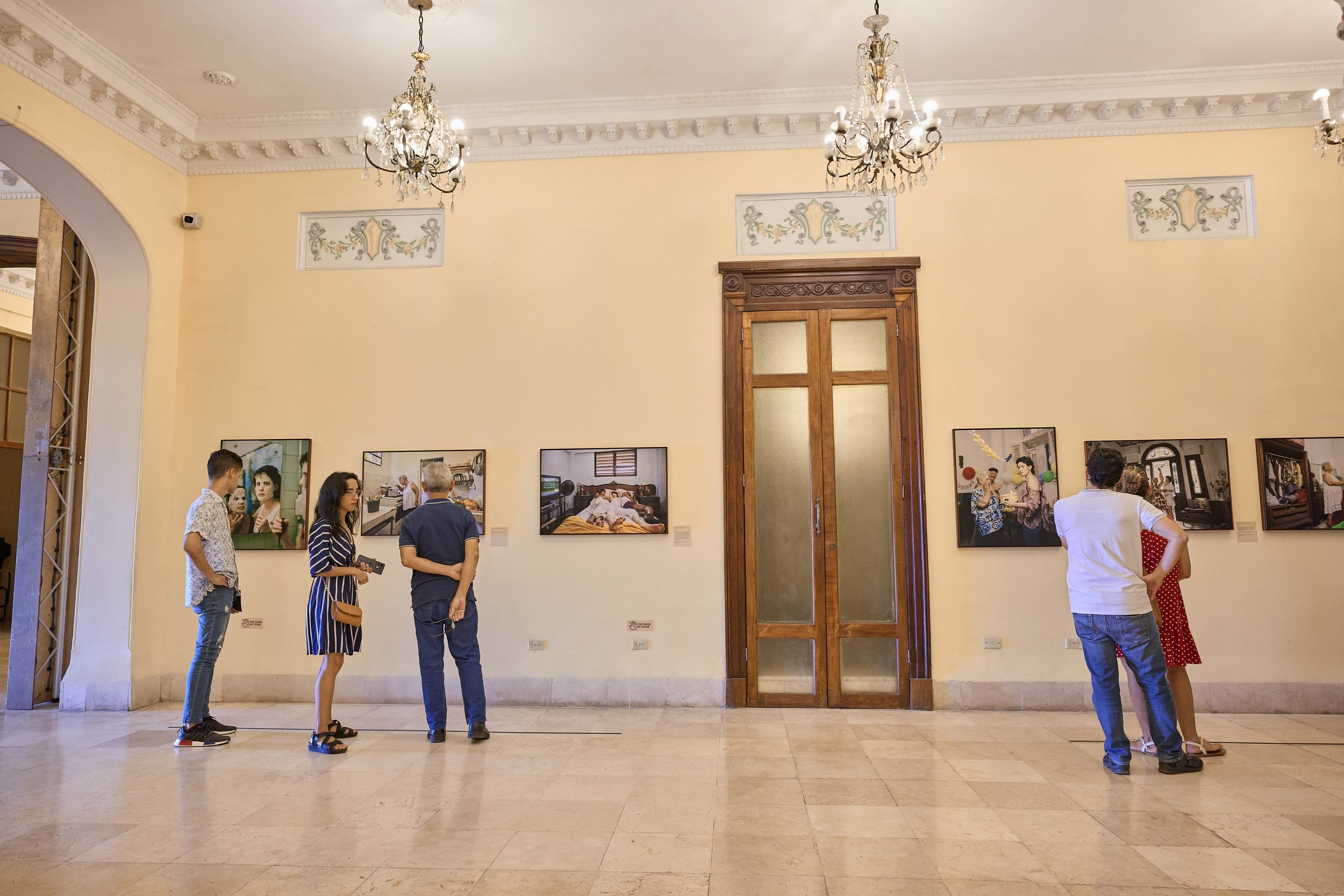
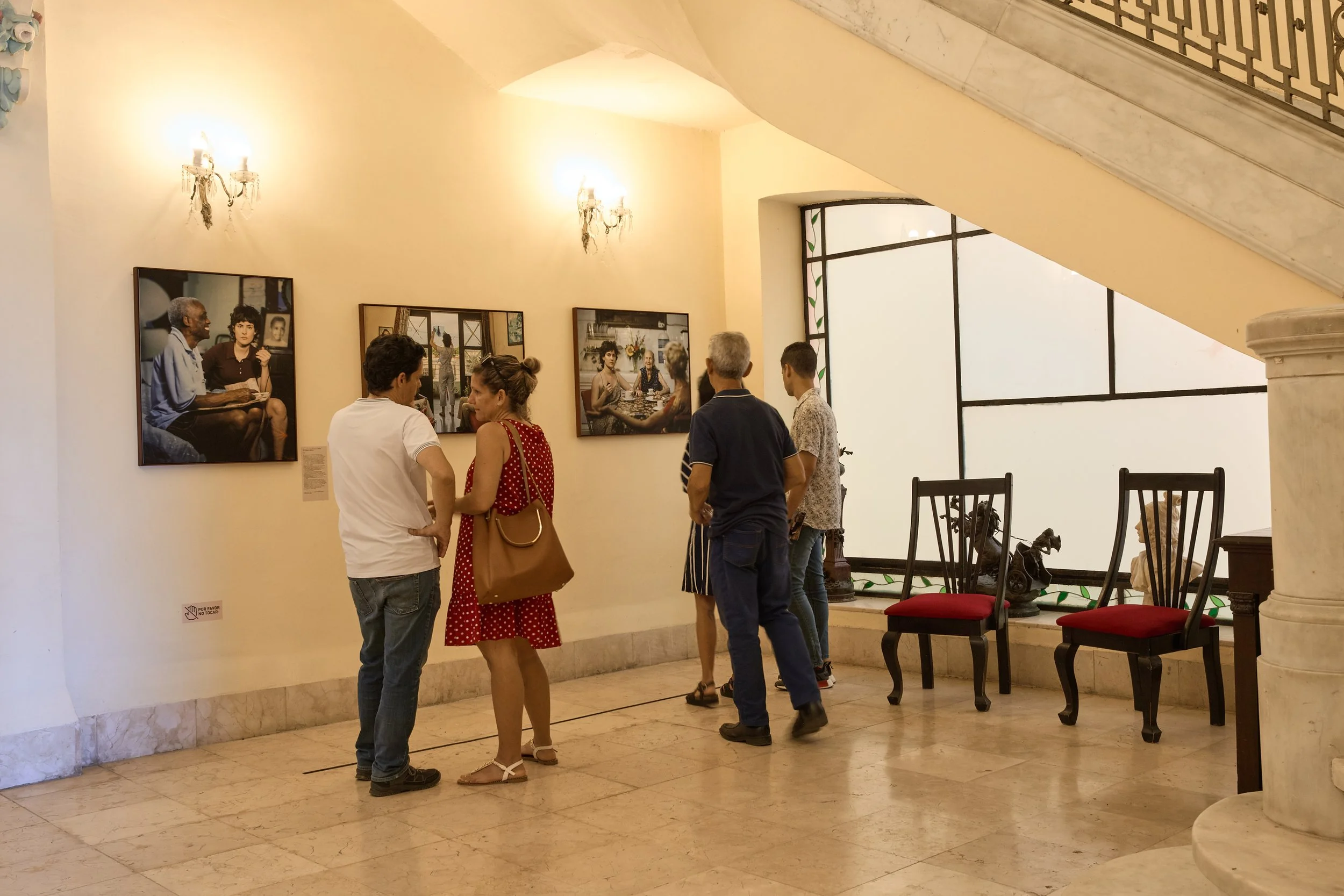
2024 Havana
Borrowed Grandparents
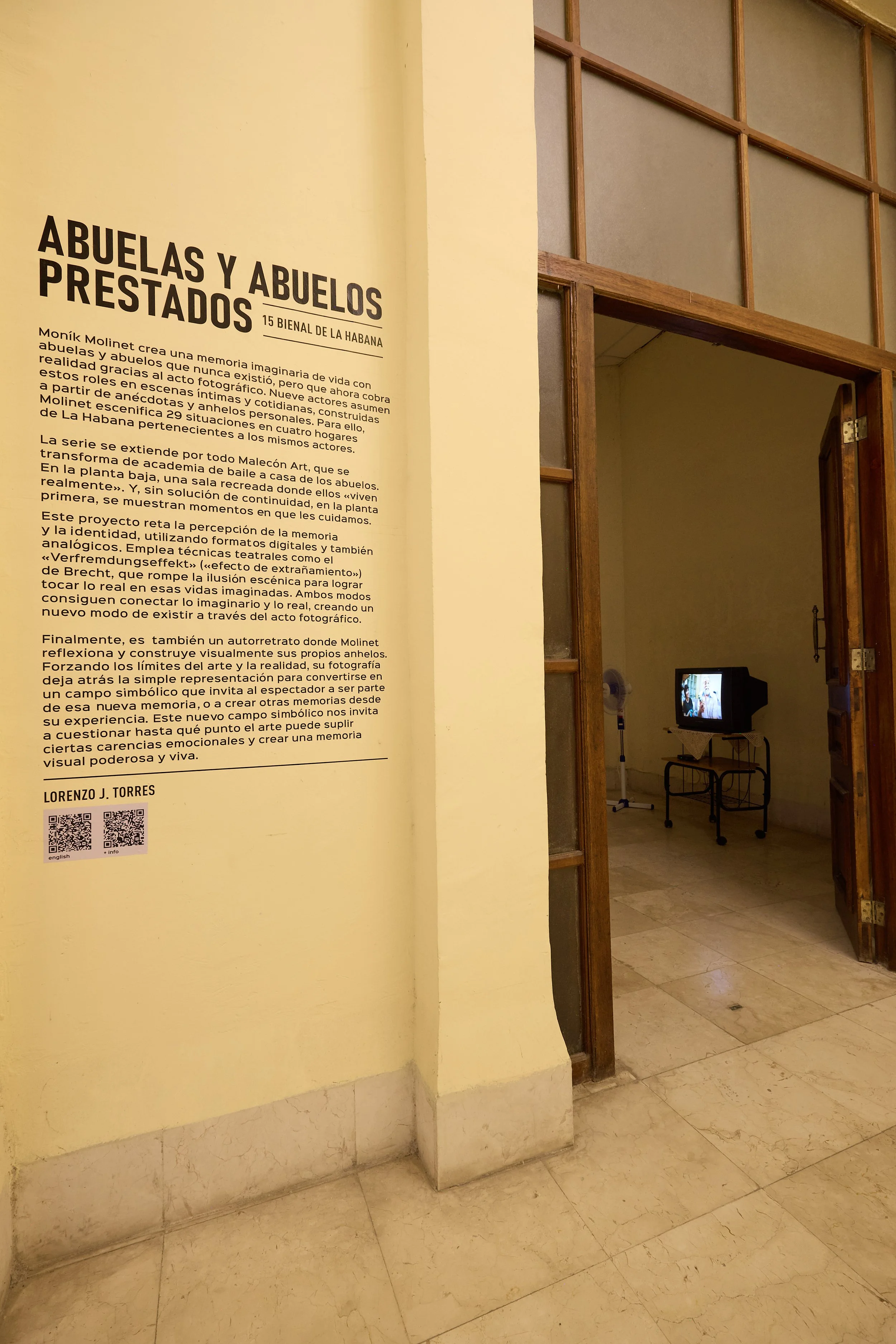
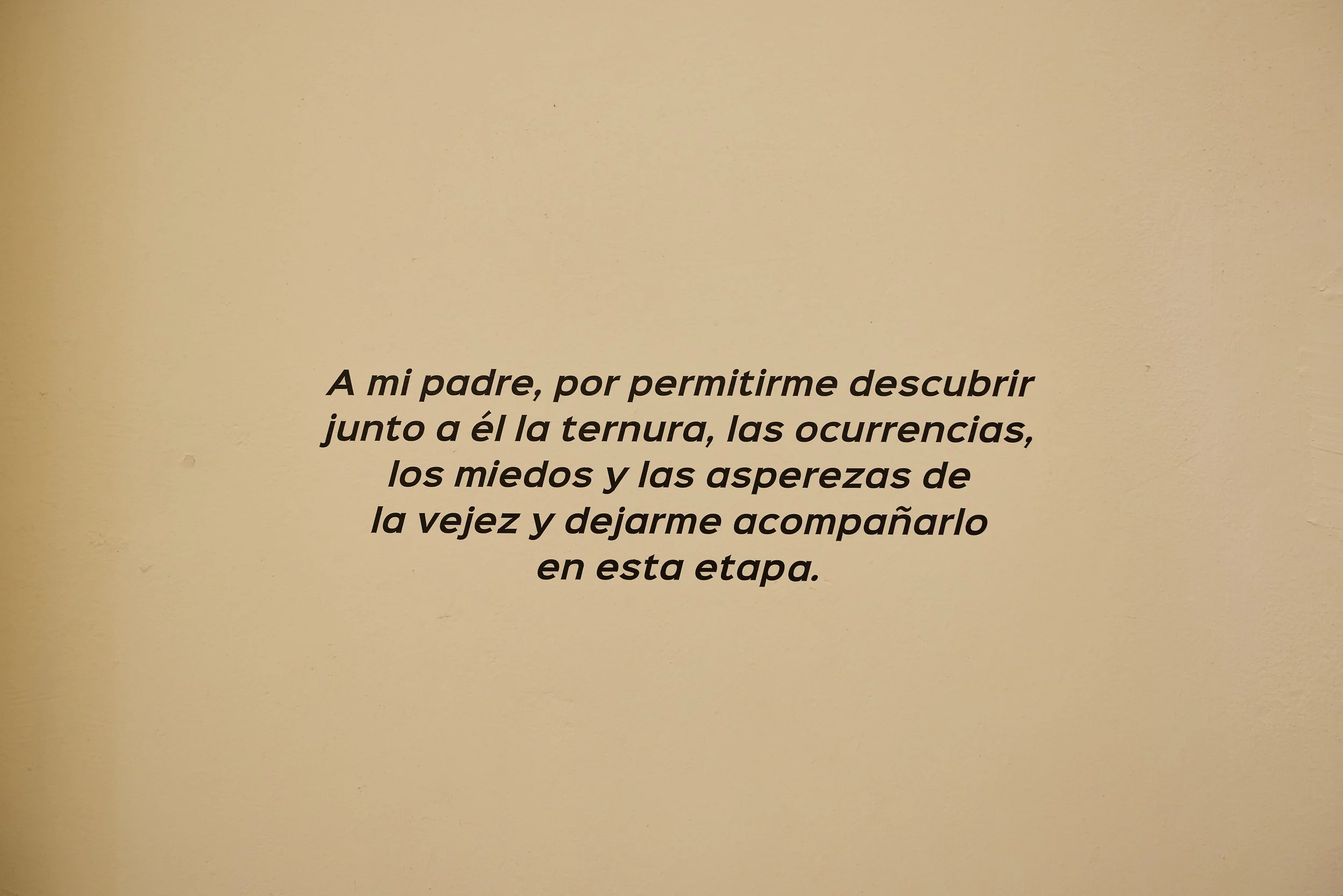
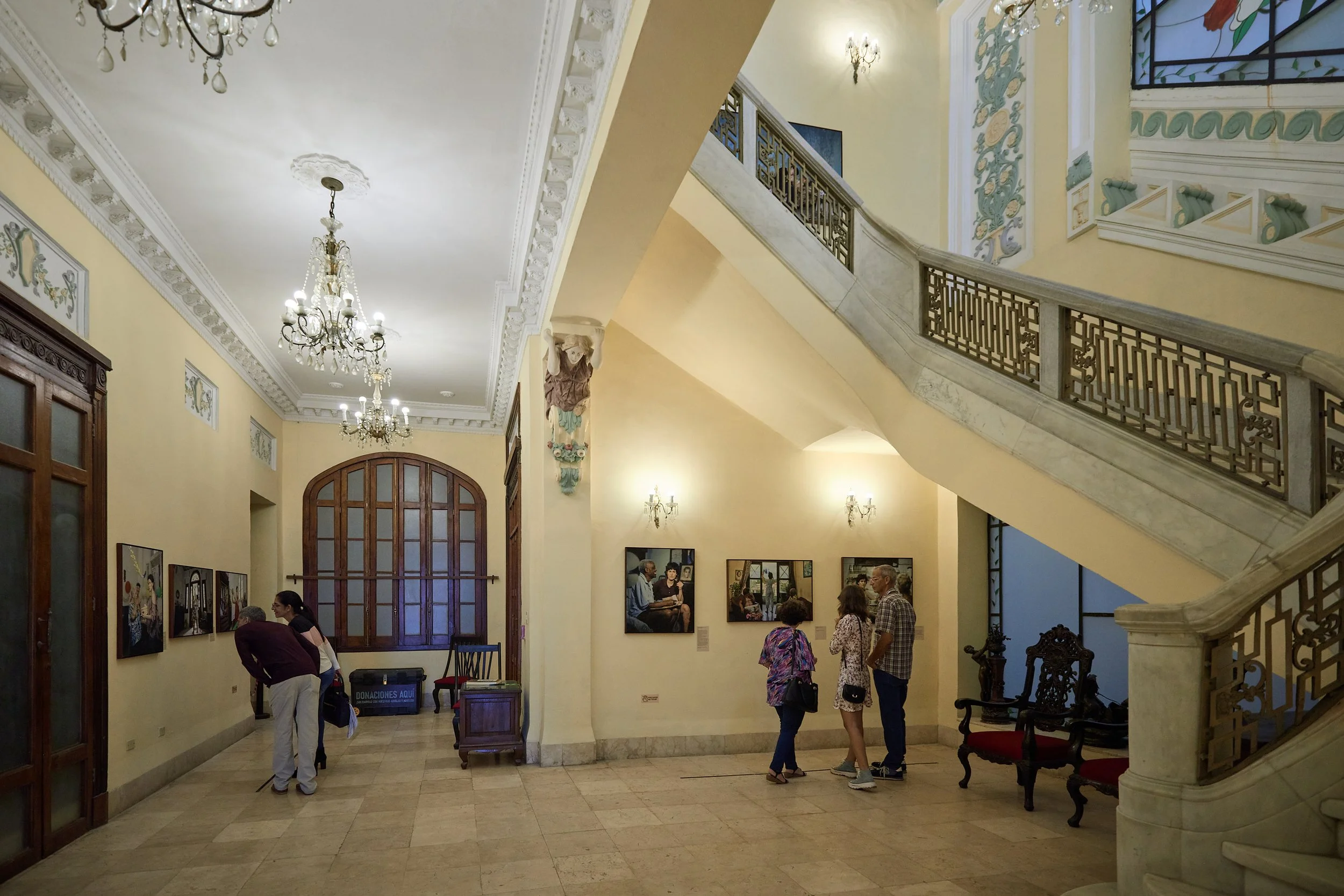
Self-portrait photography project where I recreate with nine actors and in their own homes a memory that does not exist for me: The relationship with my grandparents.
Starting from the fact that memory is not reality, but only the memories that we believe we have lived, this self-portrait photographic project aims to create a memory of what I did not live, to fabricate, through the will and the resources of representation, memories of a relationship with my grandmothers and grandfathers.
I asked several friends about the most important memories with their grandmothers and grandfathers, these writings full of emotion, longing and inevitably, sadness, marked the way.
If living is the first requirement to generate memory, can this in its fragility be manufactured? Created without denoting the seams of its manufacture? In this project I investigate the answer to these questions. Nine actors accompany this search, contributing their experiences, sensitivity, talent and even their own homes.
The project is articulated from the Brechtine technique of distancing that seeks to confront the spectator with the truth, taking him out of an illusory world.
This project does not intend to deceive the spectator, it is not documentary photography, it does not seek the truth. Rather, they are performative gestures, acts of intervention where what matters is not fidelity to the memory, but the possibility of it existing.
I am interested in taking a concept to its ultimate consequences, this work is made with this premise, the emotions created in its realization remain in me and in the rest of the team.
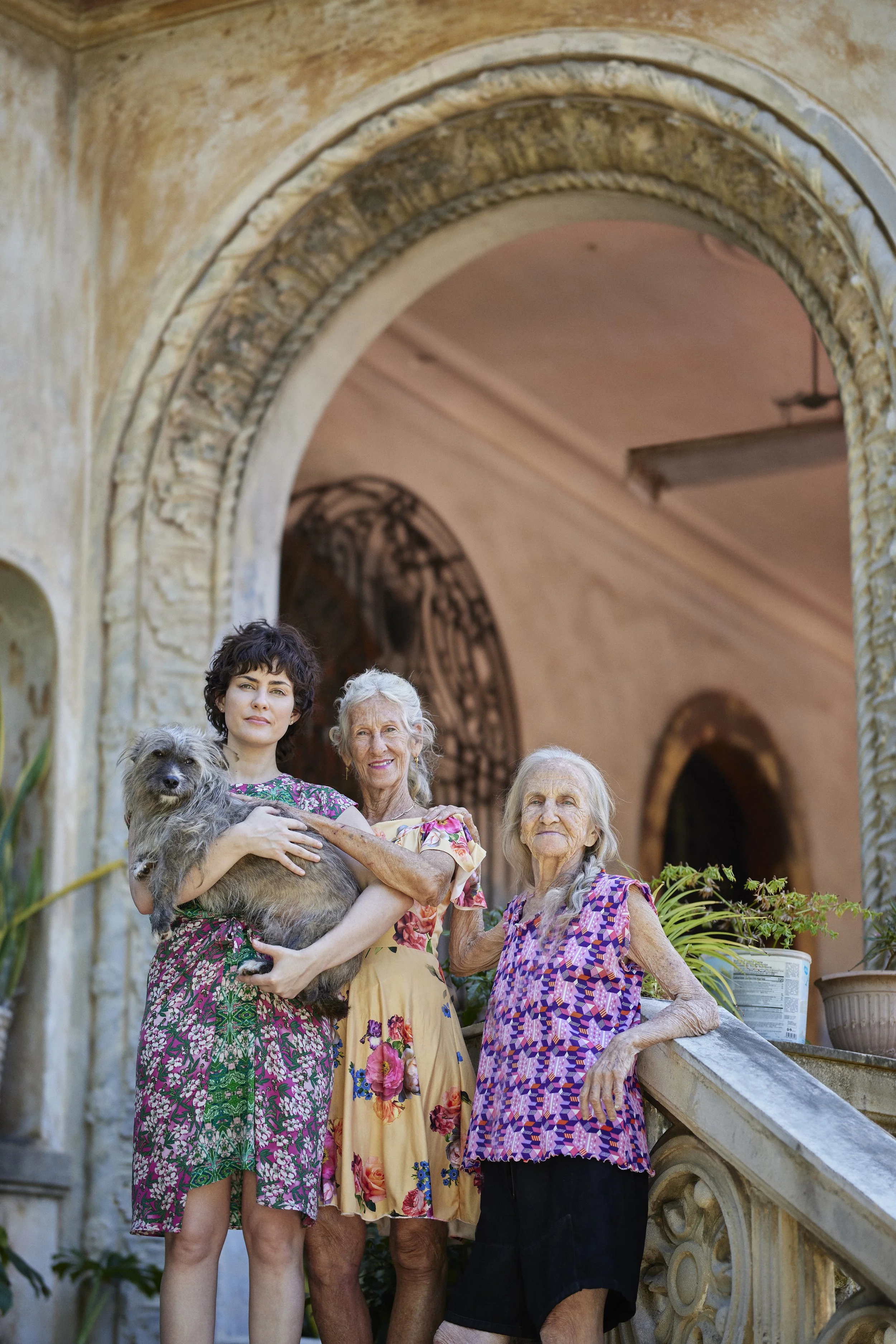
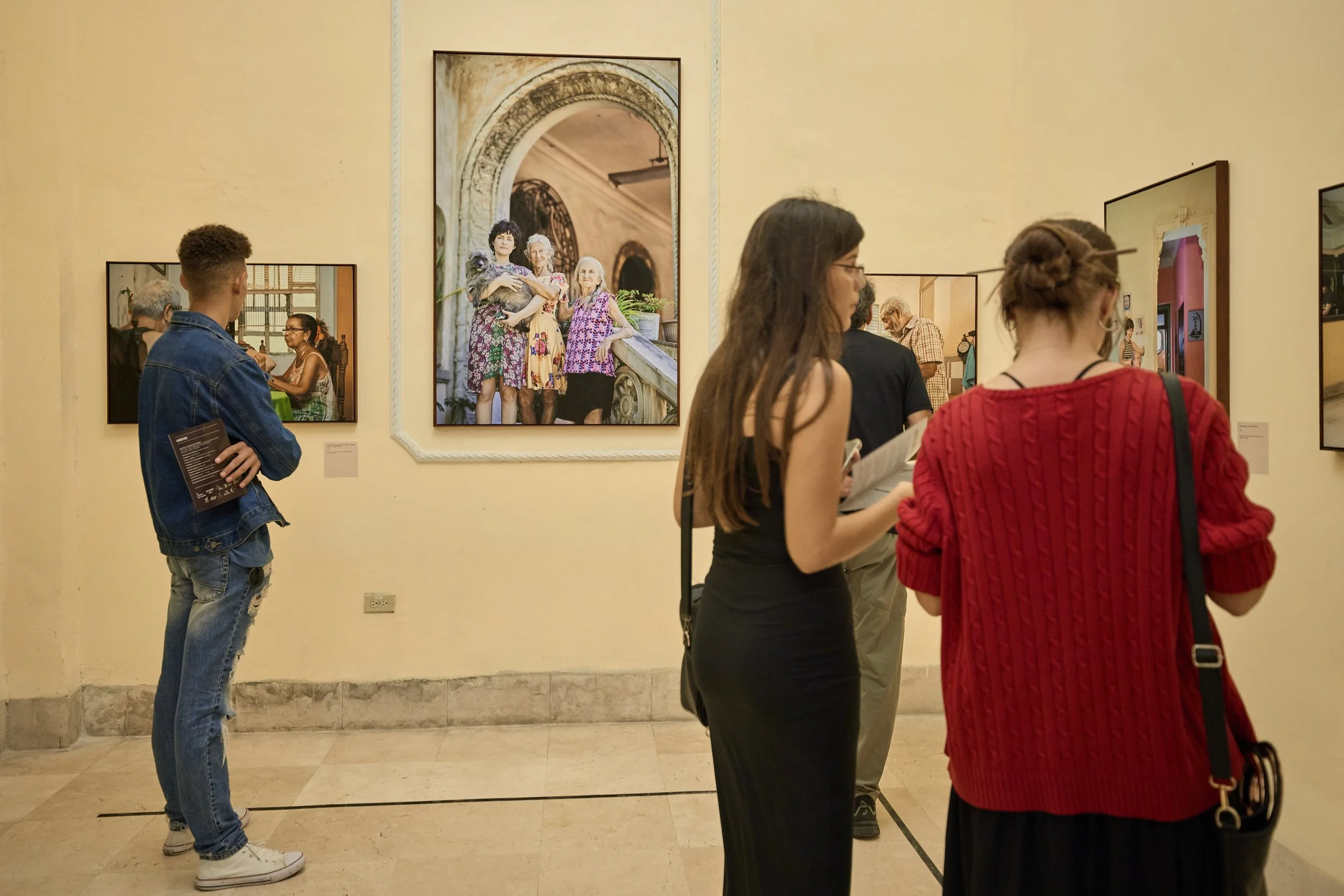
Borrowed Grandmothers This photograph was the only one of 29 memories, in which the action was focused on the act of photographing: the family photo. It is a tribute to Richard Avedon, one of my first references, and to his anecdote "Borrowed Dogs". Avedon says that, together with his family, he had the habit of posing for the family album in front of luxurious houses and cars that did not belong to them, always with a smile. They even asked for borrowed dogs, as if it were essential for the Avedons to have one. Thus, they created a family album built around a little lie about who they were that revealed the truth about who they wanted to be. In one year, he found up to 11 different dogs in that album. This anecdote reflects how identity is constructed through performativity and image, and how photography has the power to generate a "truth" using the resources of representation. That's when the idea of “Borrowed Grandparents" came about.

Breakfast conversation at my grandmother Tania P. and my grandfather Otto's house
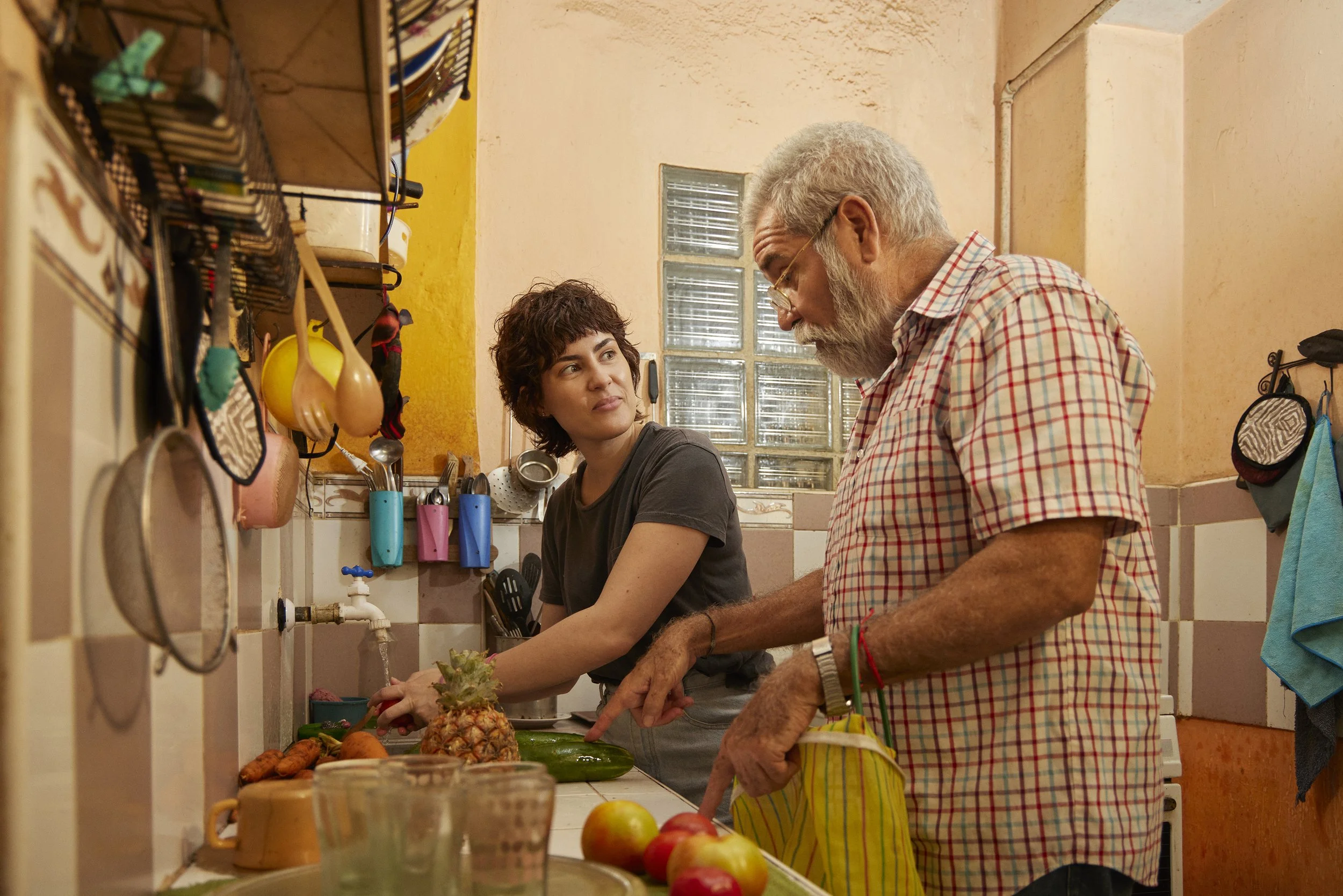
Washing vegetables back from the market and talking about macrobiotic cooking with my grandfather Otto
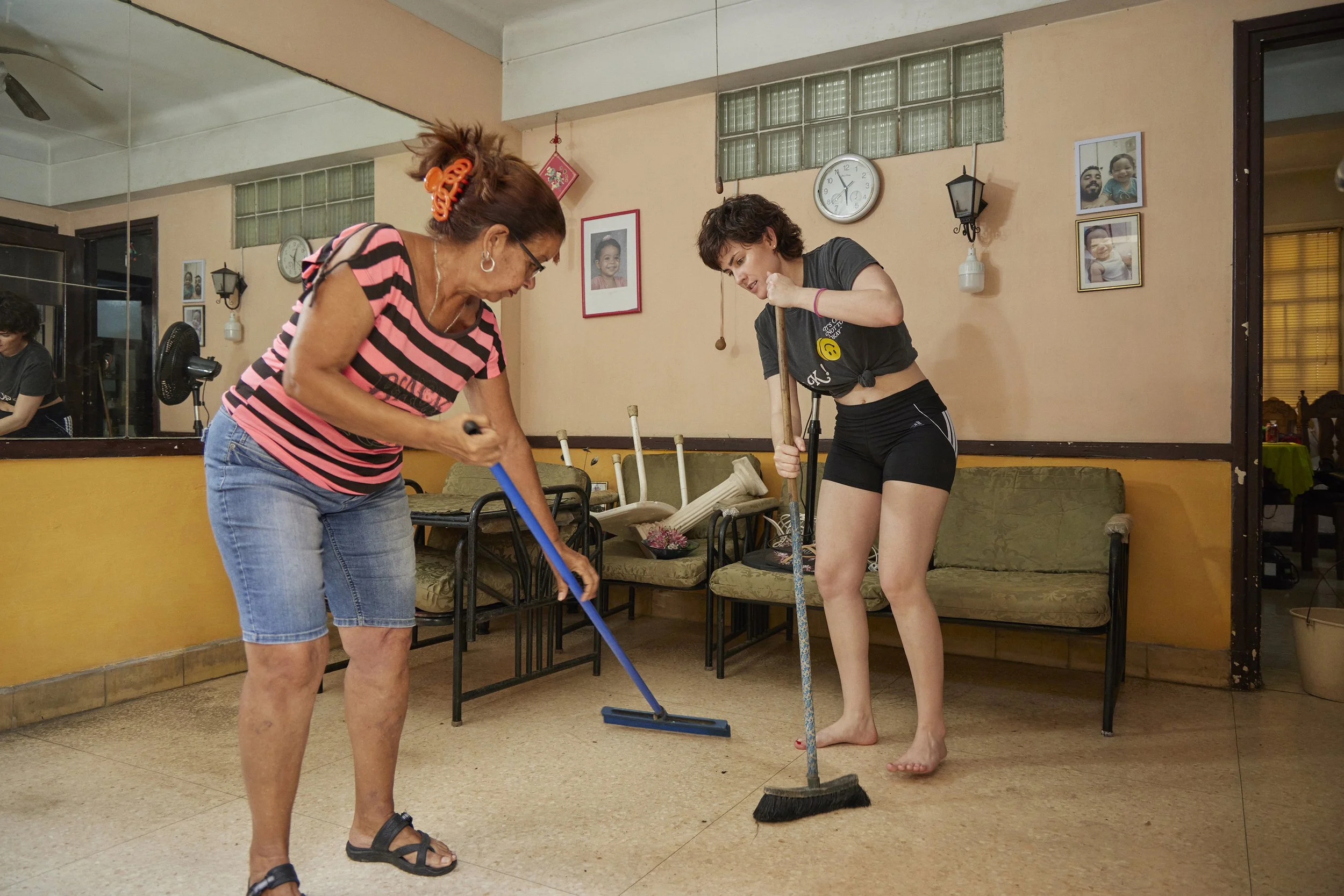
Sunday general cleaning with my grandmother Tania P.
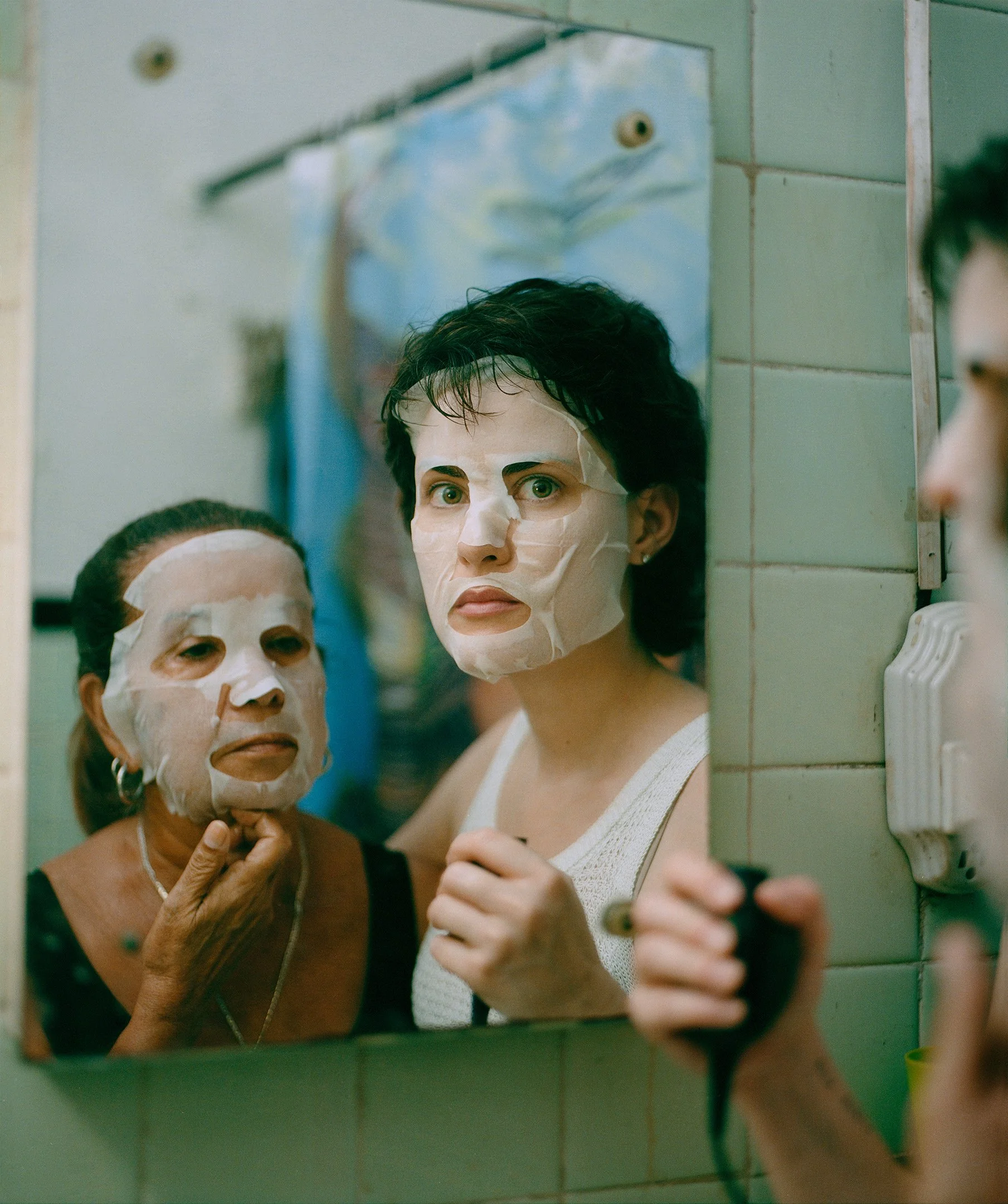
Homemade spa with my grandmother Tania P. After immersing myself physically and emotionally in the memories I had decided to inhabit, Brecht's Verfremdungseffekt or "distancing effect" resource allowed me to get out of them and confront the viewer with all that truth. Thus, in an act of relief and complicity, I was interested in showing the seams of the work, saying: it is a self-portrait project, I have needed to experience, feel all this and this is exactly how it has turned out for me.
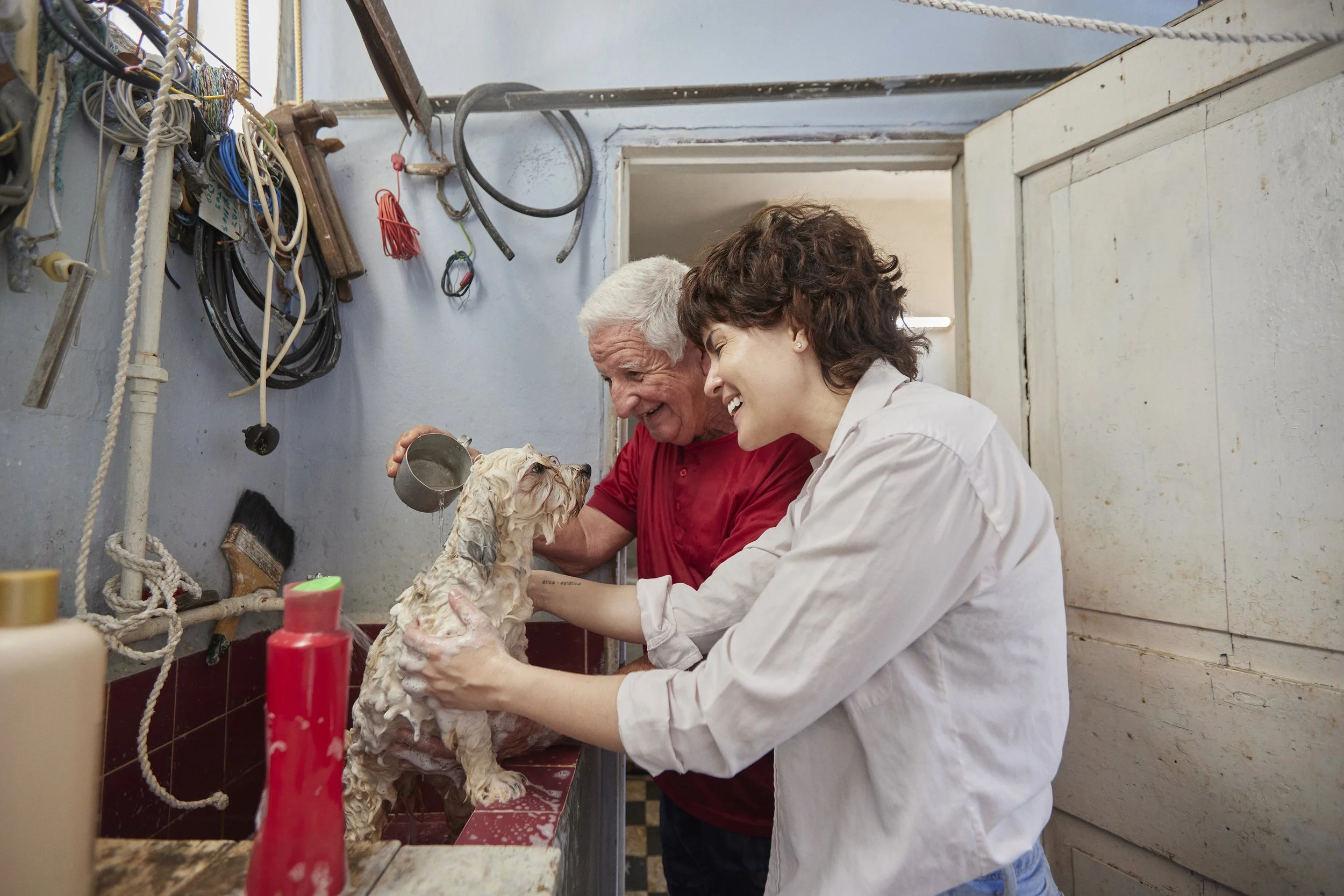
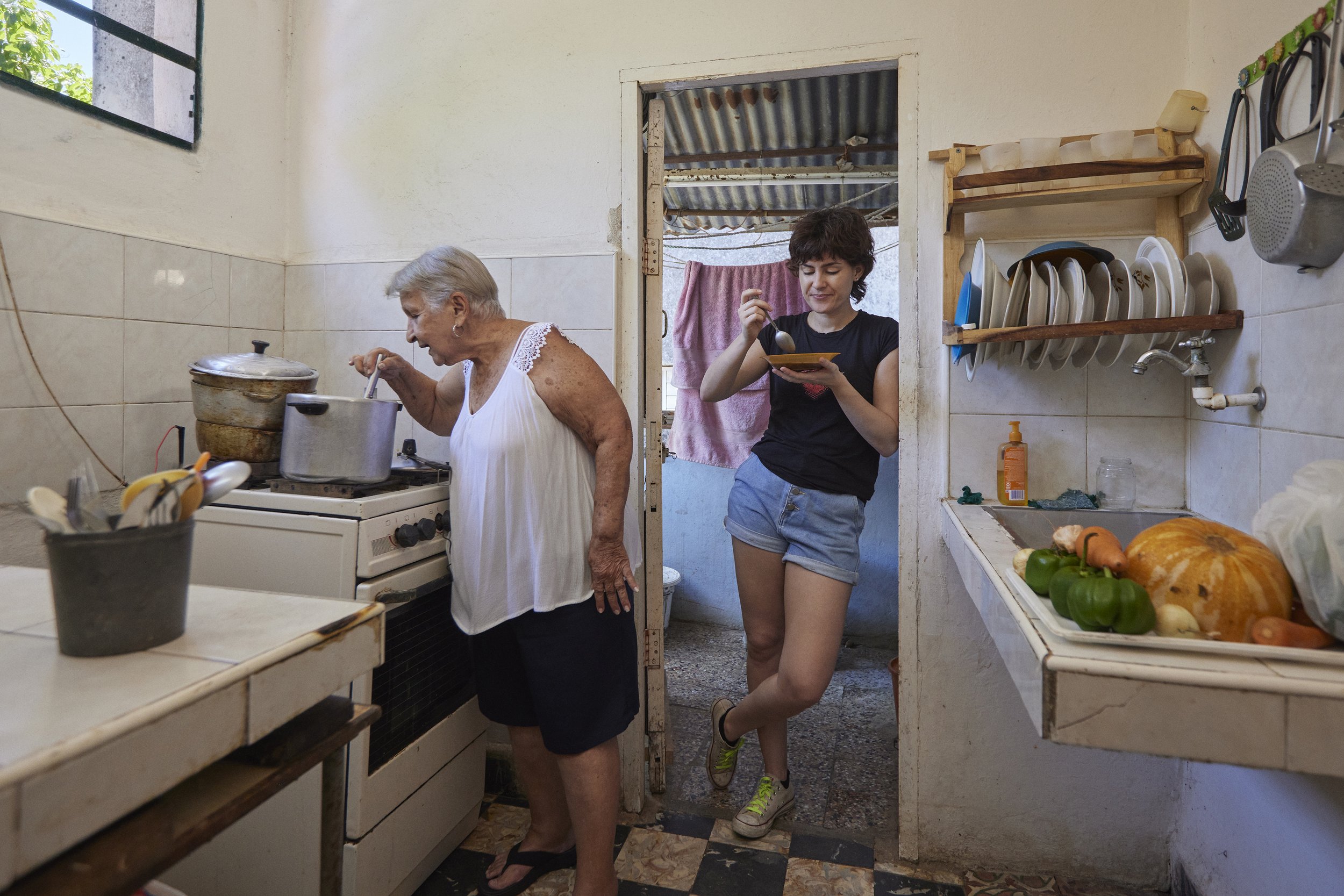
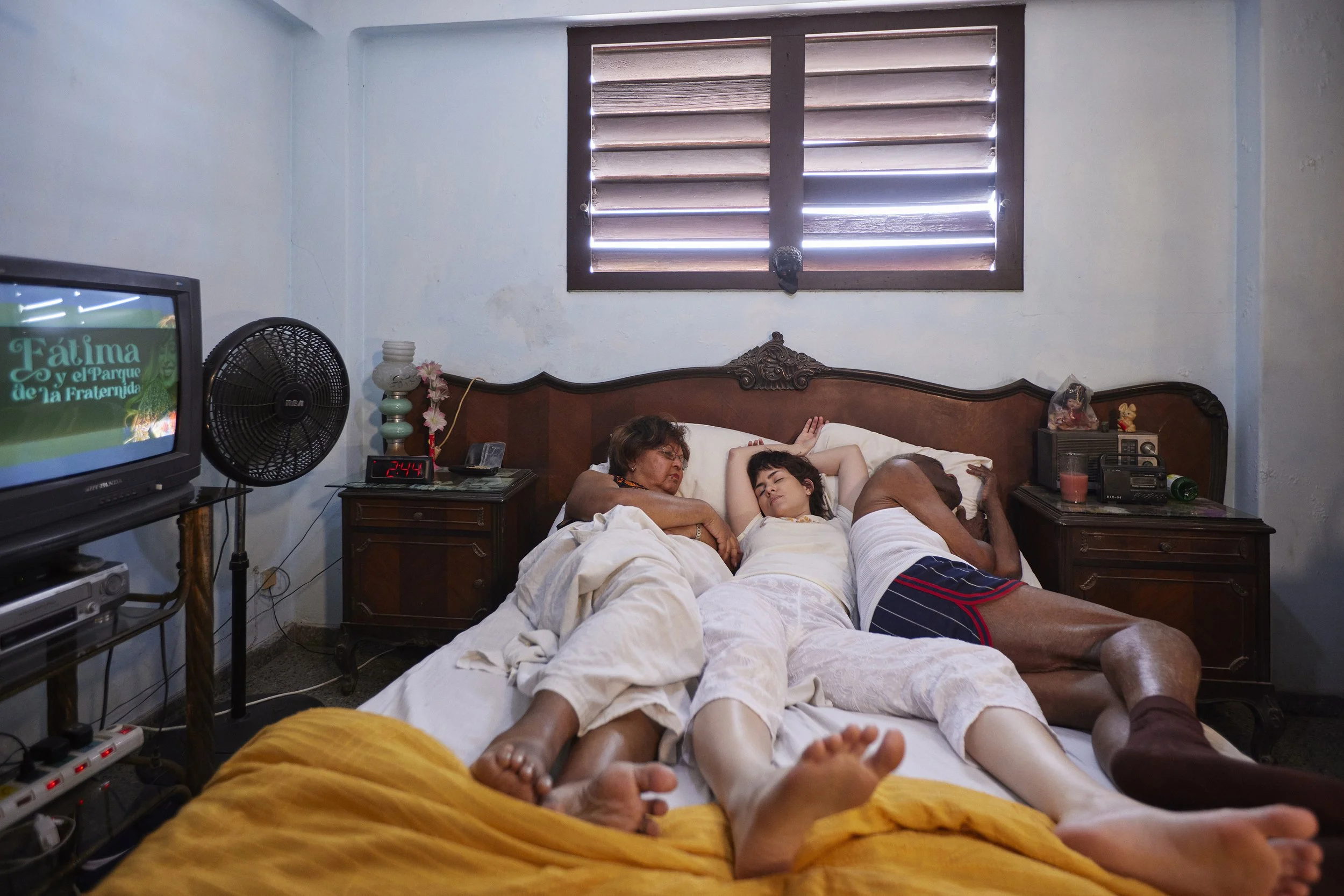
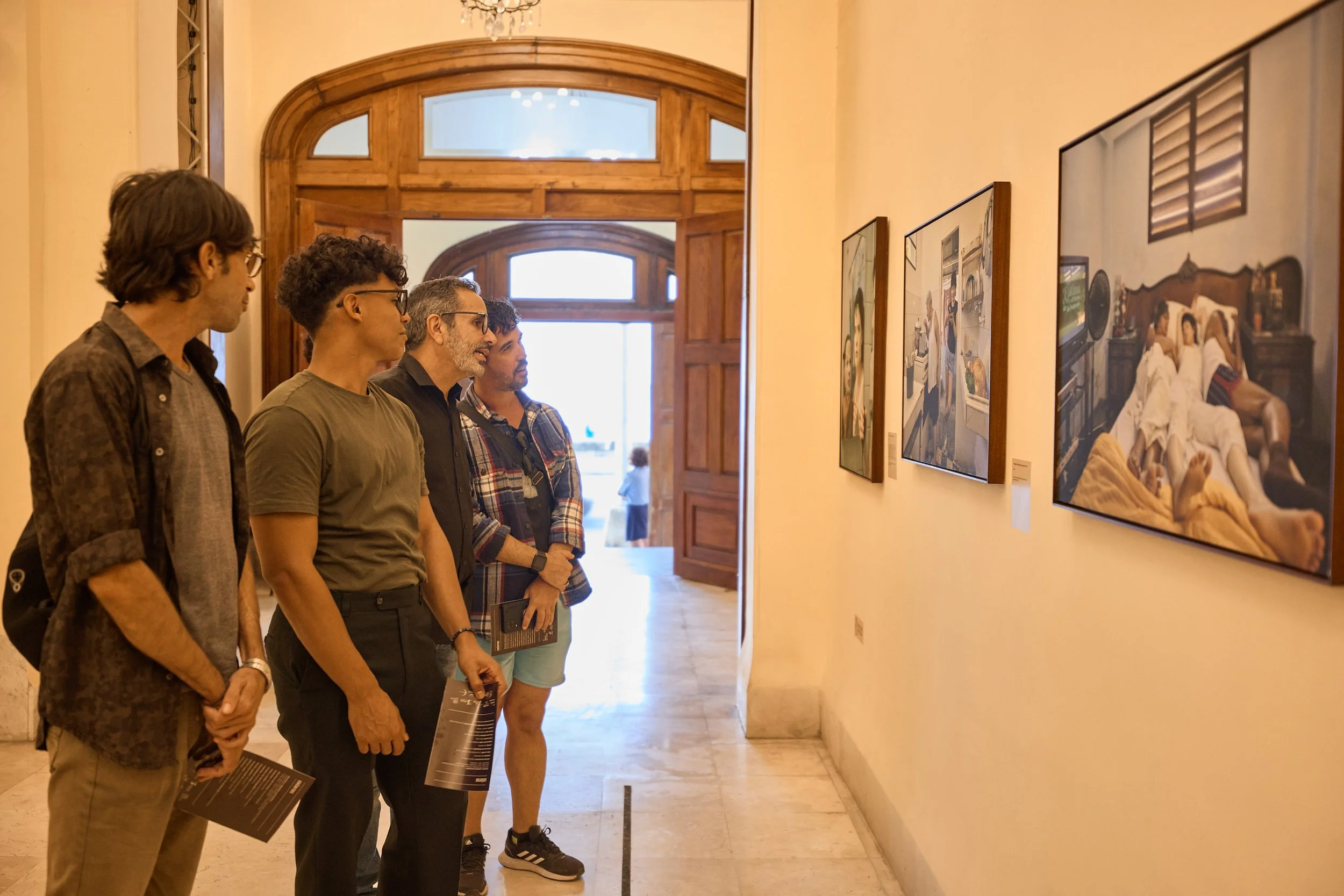
Nap after lunch with my grandmother Estela and my grandfather Adalberto At the end of each day of shooting, we interviewed my borrowed grandparents and asked them, as experts, which scene they found most convincing, most real, their favorite. This memory came to life in my borrowed grandmother Estela's room. During the session, we tried different compositions: I hugged them, we pretended to be asleep for a few minutes, we “spooned," laughed and talked. Although I was afraid that so much physical contact, closeness and intimacy with a complete stranger might make them uncomfortable, I was surprised that both Estela and Adalberto chose this as their favorite scene.

Surprise birthday for my grandmother Tania D. - This is a series of self-portraits, even though other people besides you are involved in the staging. Can an exercise where the representation includes other presences be described as a self-portrait? - A self-portrait is an essay about oneself. There are many ways to use visual language to say and enrich these, poetic, symbolic forms, even without involving the human figure. Making a self- portrait is being in charge of my own representation. Excerpt from an interview by Deborah Rodríguez Santos, for OnCuba, October 2024
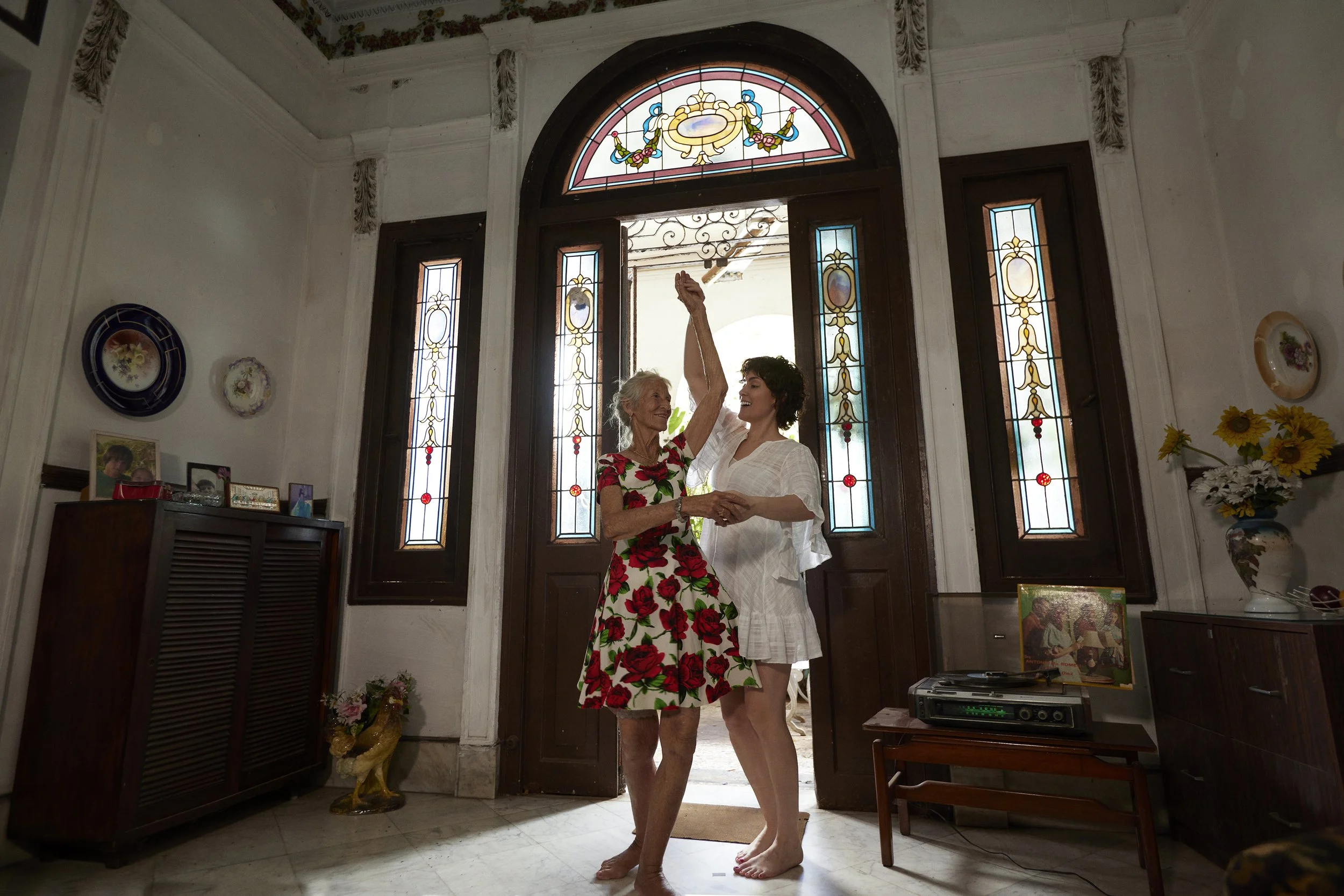
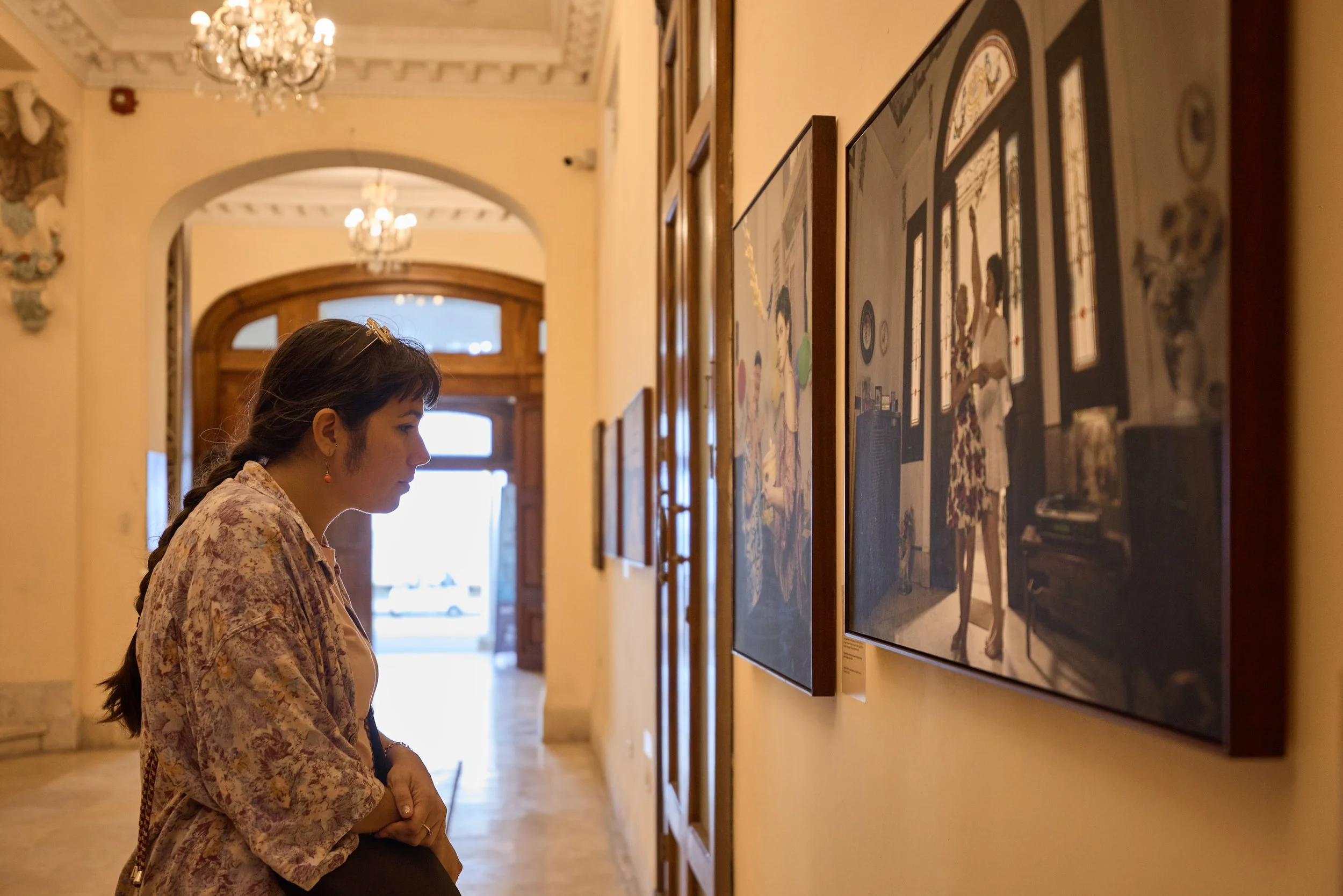
Dancing afternoon with my grandmother Julia My borrowed grandmother Julia is the only one who didn't have children... and now, even though she's borrowed, she's a grandmother. We visited her in her apartment in Vedado, she lives with a white rooster with blue eyes that is her treasure. - I had to lock him in the bathroom because he's jealous of me - she said. Somehow, when I see Julia, I see that rooster with blue eyes, a strange, mythical being.
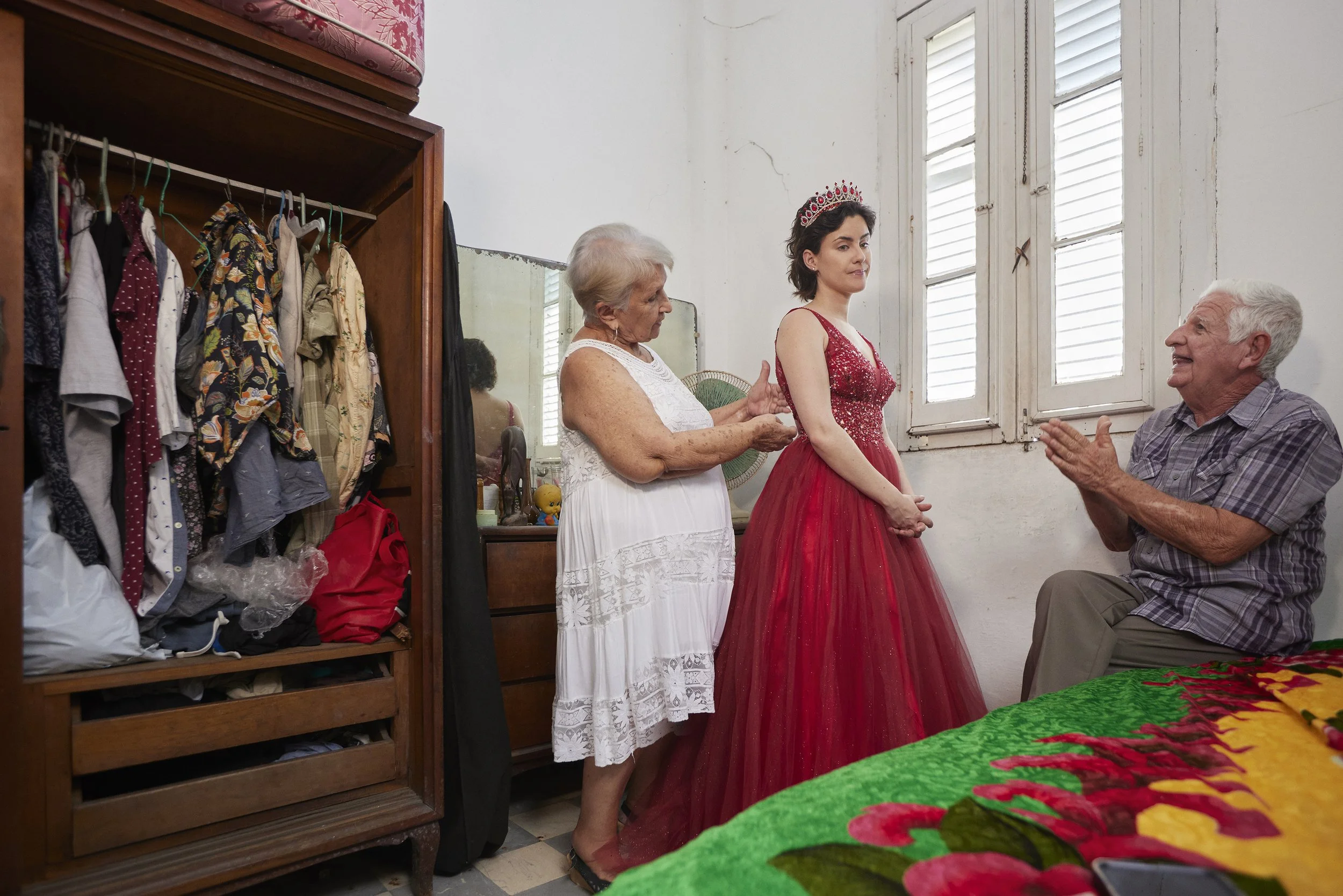
My grandmother Tania D. insists that I take some photos of myself in this 15th birthday dress, my grandfather José intercedes for me

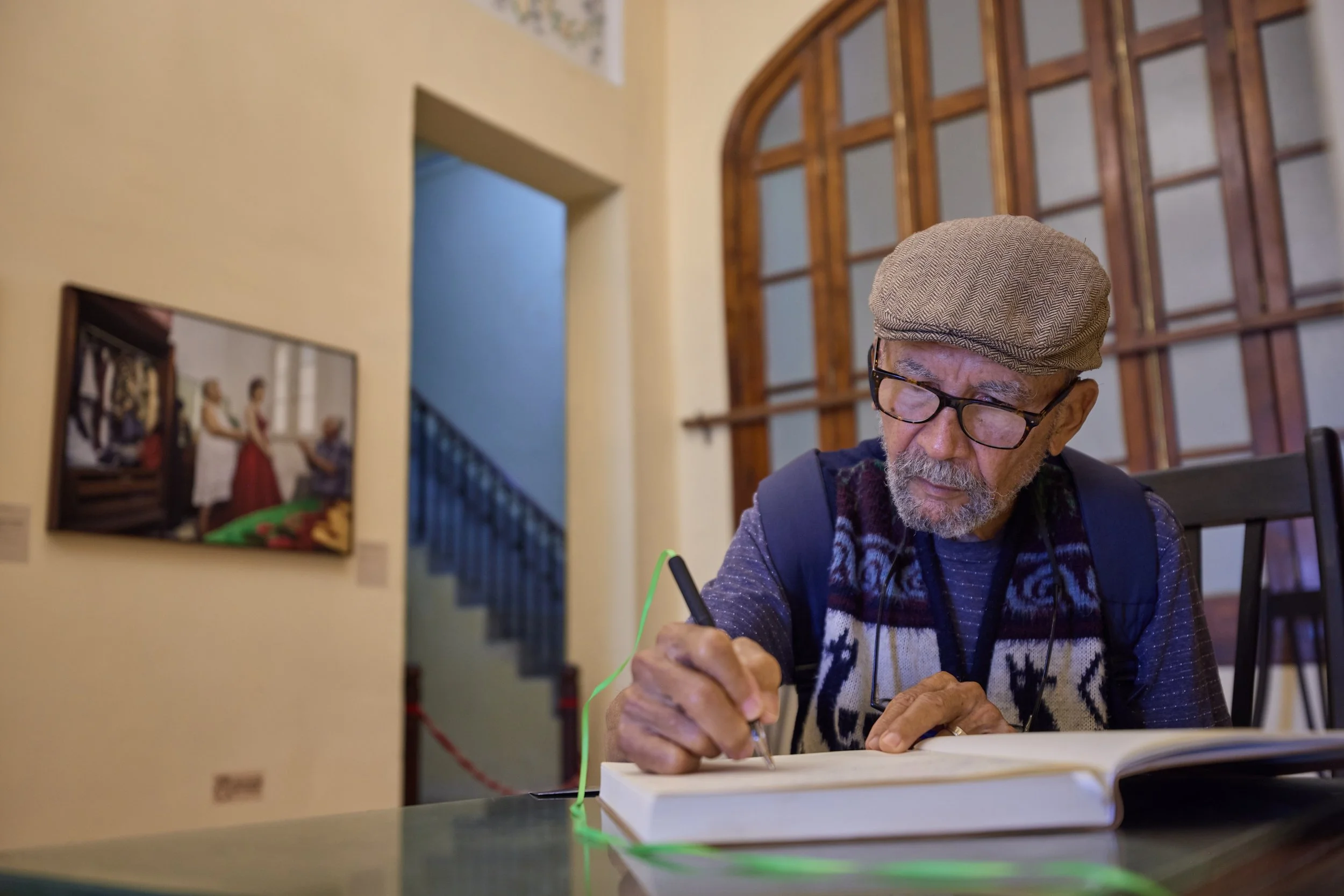
Listening to my grandfather Adalberto's notes to not forget My borrowed grandfather Adalberto, 84 years old, has the habit of writing everything down, for fear of forgetting. We discovered this when we visited him to give him the good news that he had been selected. He immediately took out a small clipboard that he placed on his legs, improvising a table, and looked for the page with the date of the day. He read to us: "Karla called, producer, Monik photo shoot, home visit, Monday, April 8, 11:30 a.m." To which we responded almost in unison: "I'm Karla! — I'm Monik!” Adalberto and I share several things. He is from Pinar del Río, like my maternal grandparents, and we both have a fear of forgetting. I photograph so as not to do so, and like him, I have a great fondness for notebooks. We talked for a while, and he proudly showed us his collection of notebooks, which he kept in boxes. In one of them, he had his medical history, like a diary, with dates, study reports, and prescriptions. We found photos of his eyes and x-rays of his neck. We asked him to bring the x-ray, his notebooks, and the clipboard to the set. At the moment of the fourth wall of this memory, Adalberto appears repairing a fan, something that my father always does at home. But, at that moment, looking for more truth for the Verfremdungseffekt, I asked him to take his clipboard and his notebooks and read to me what he had written in them. He immediately lit up. I needed to get as close to the truth as possible, to weave real life into the family memory that we were building.

Gatherings and coffee at my grandmothers Julia and Ester's house I was interested in creating a diverse household, a family of women. My borrowed grandmother Julia writes tenths, and my borrowed grandmother Ester surprised us by declaiming when we visited her at home. It seemed like a perfect combination for the small universe we were creating. In that reality, they lived in a house anchored in time, ventilated, full of flowers, care, joy, endless conversations and camaraderie. That coffee moment could become an instance of guidance and advice, a safe space for the exchange of knowledge and learning.
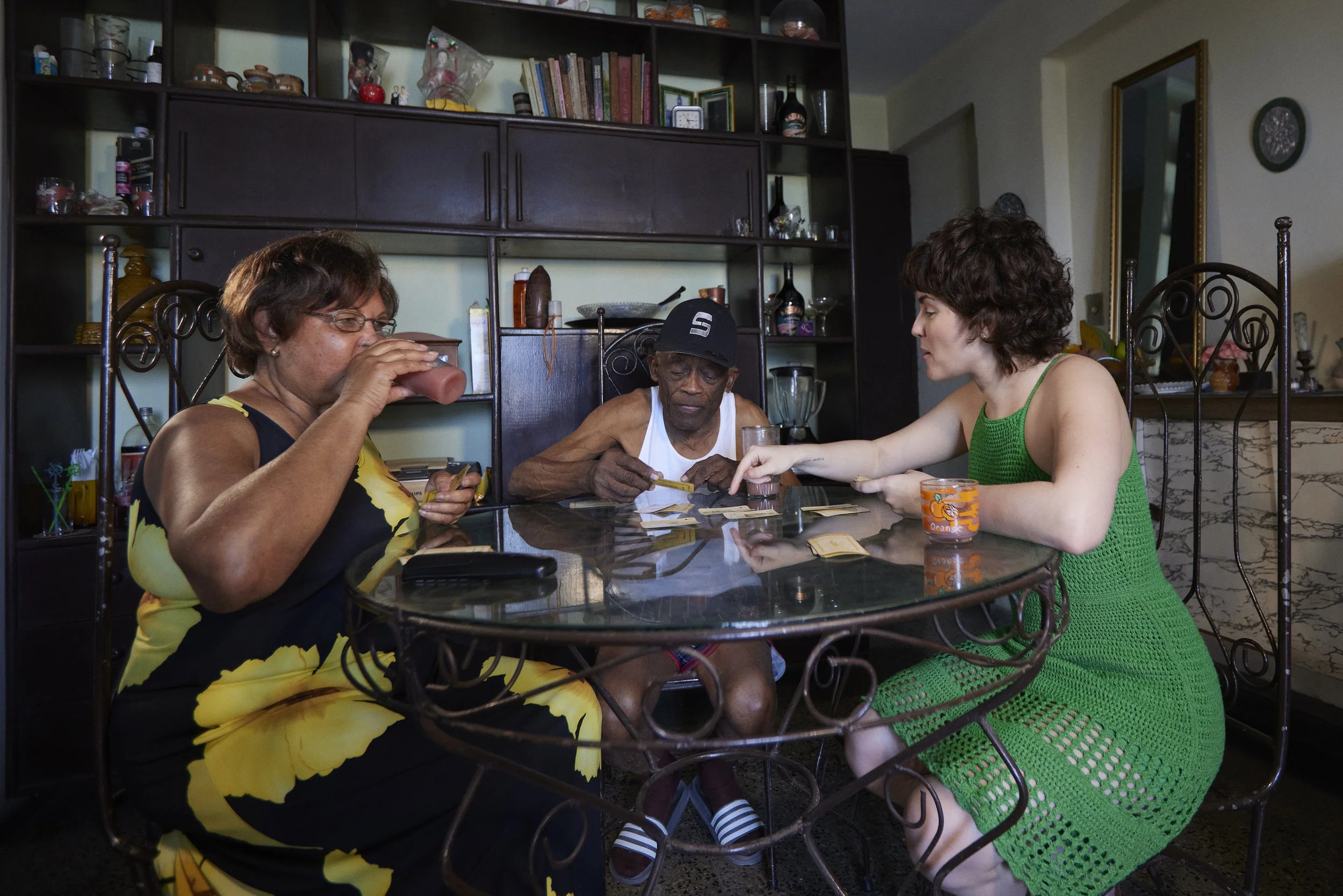
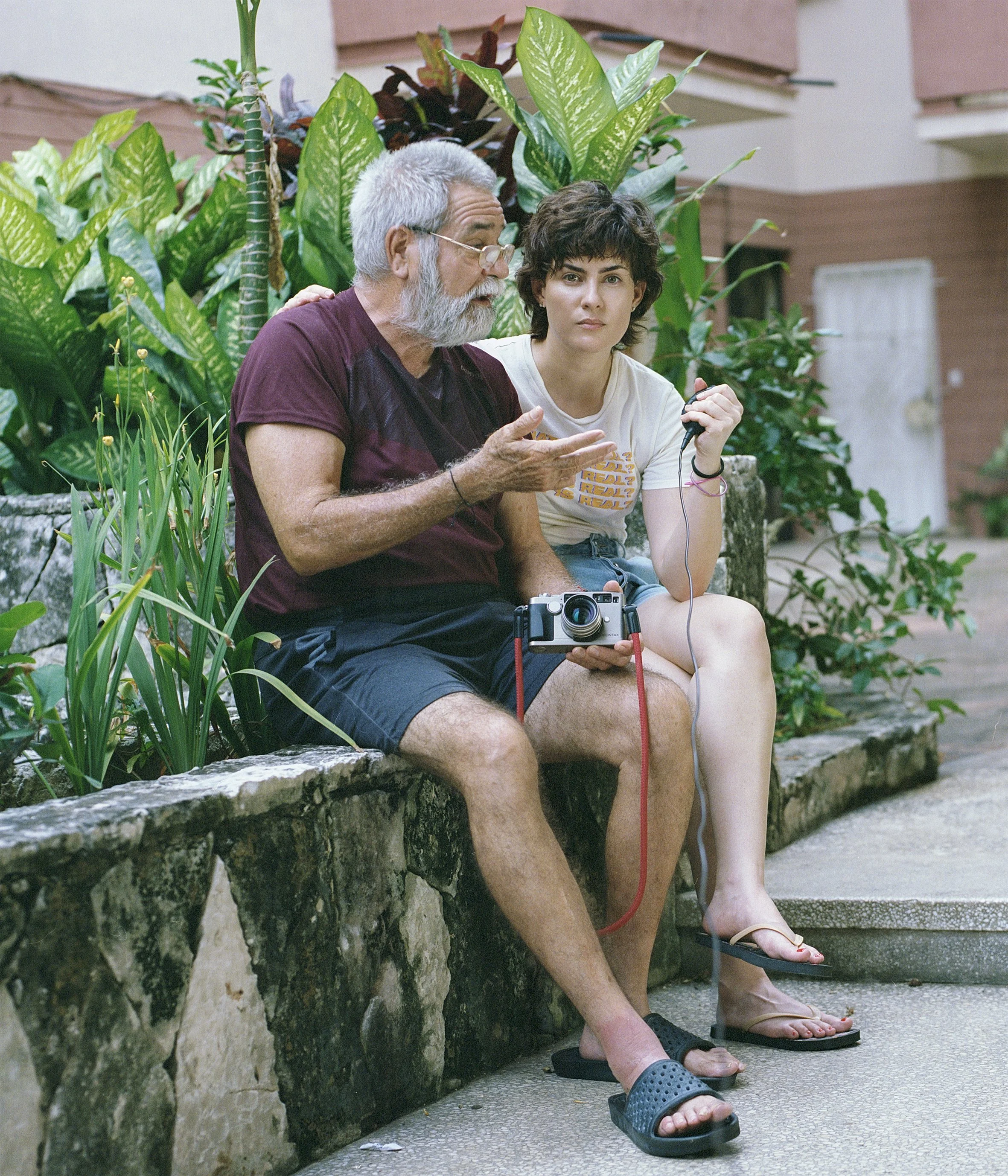
My grandfather Otto teaches me photography
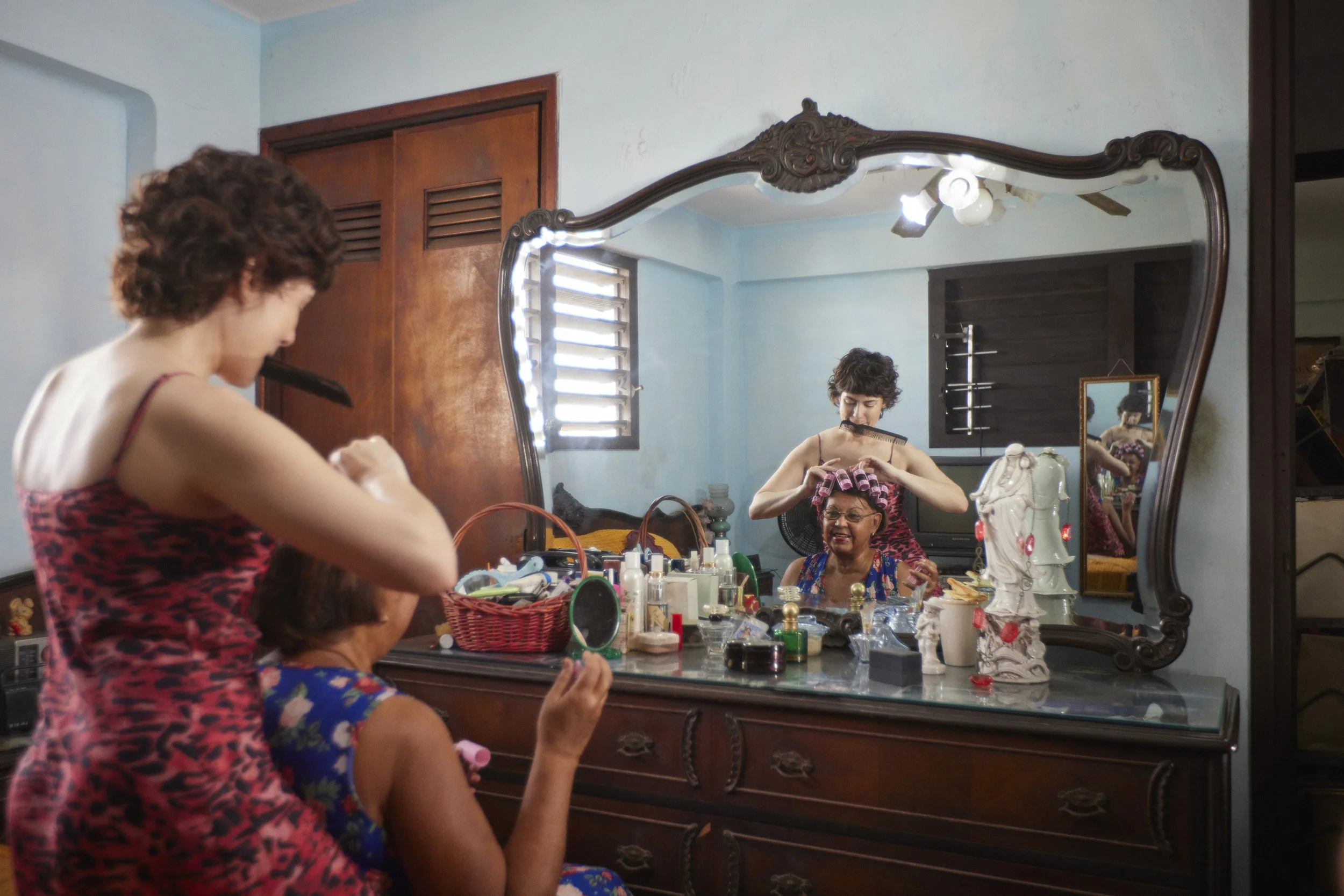
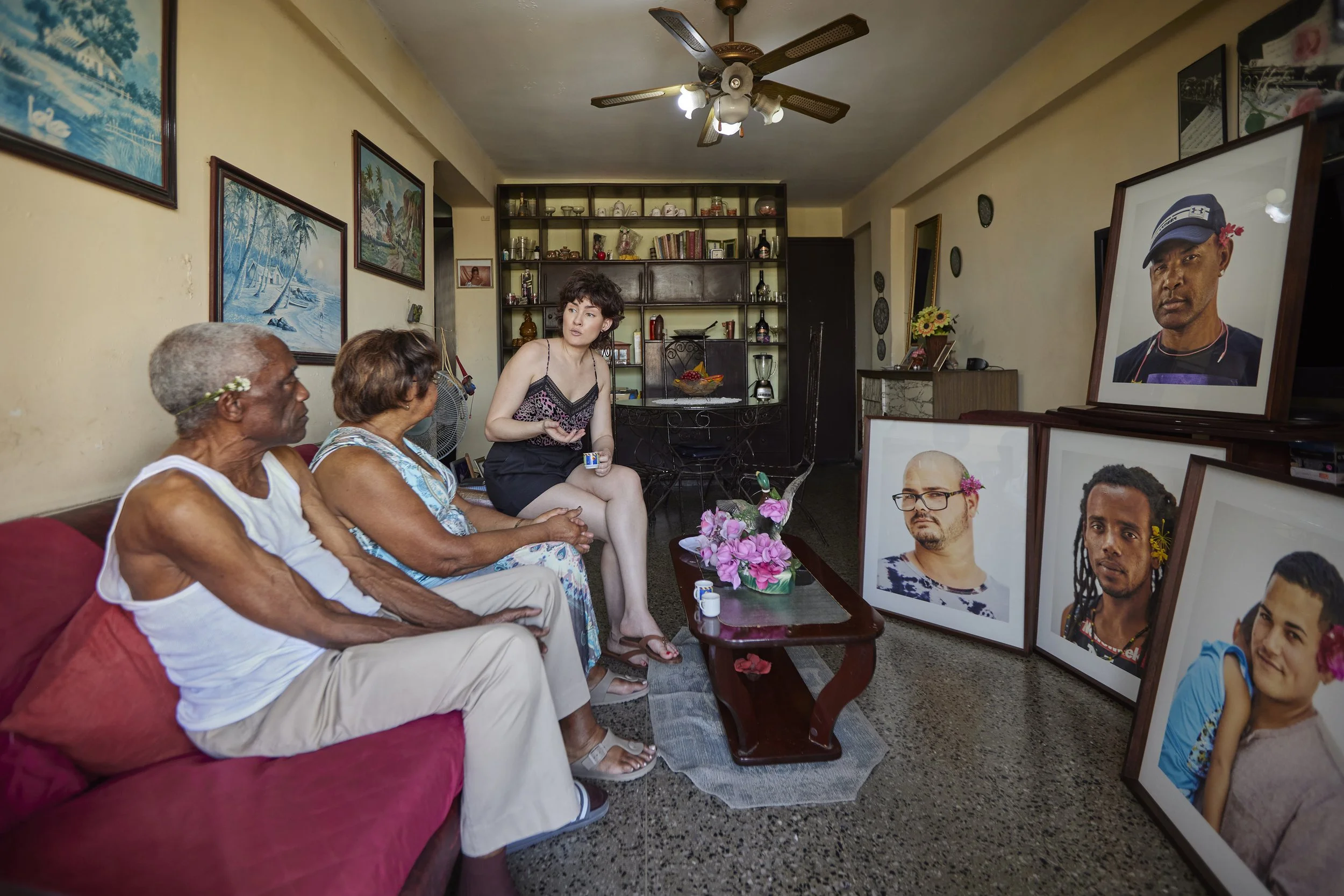
Sharing with my grandmother Estela and my grandfather Adalberto works from my last exhibition in Havana, “Masculinities”

My grandmother Estela drank too much coffee and her blood pressure went up
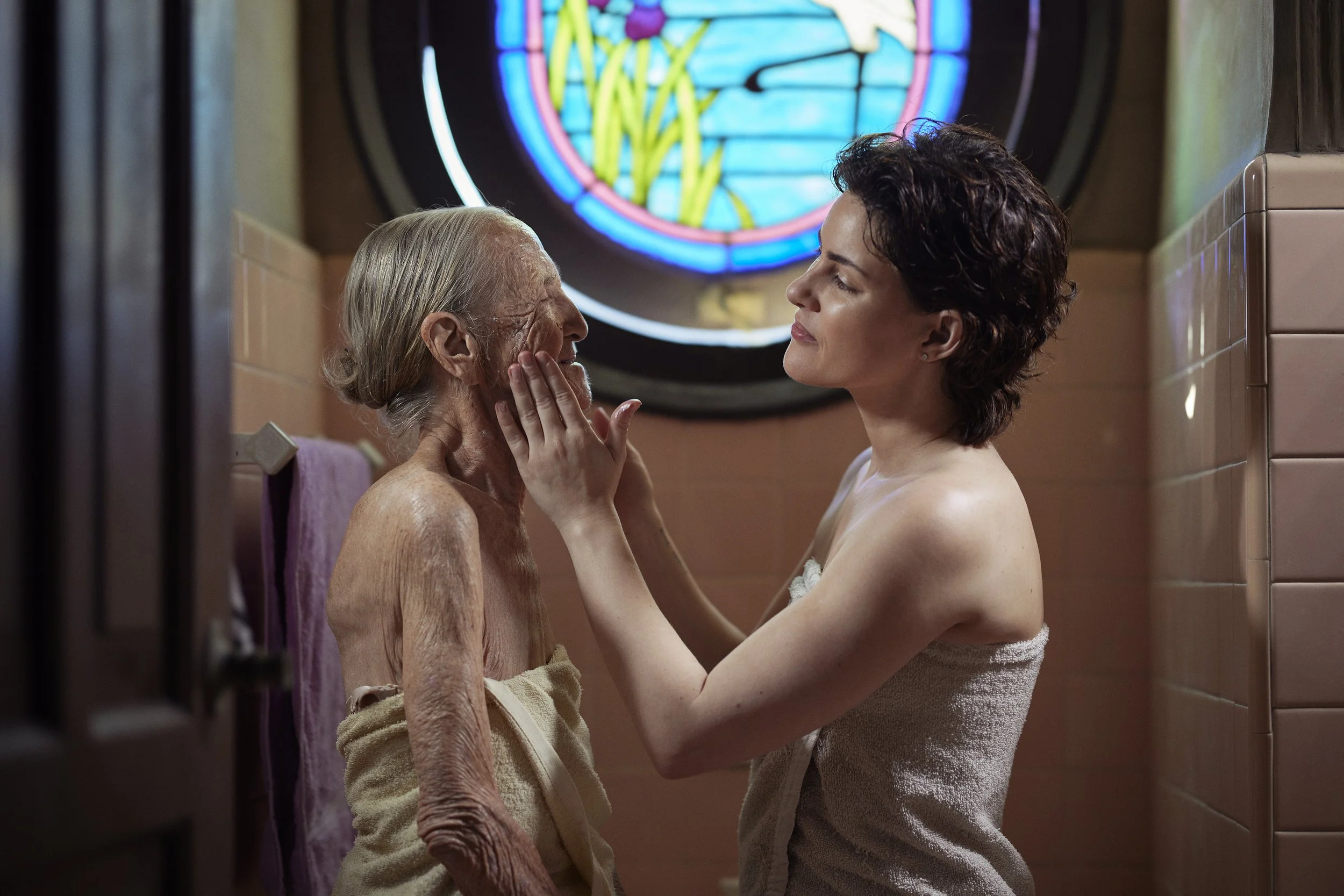
I help my grandmother Ester after her shower, with cream for her delicate skin
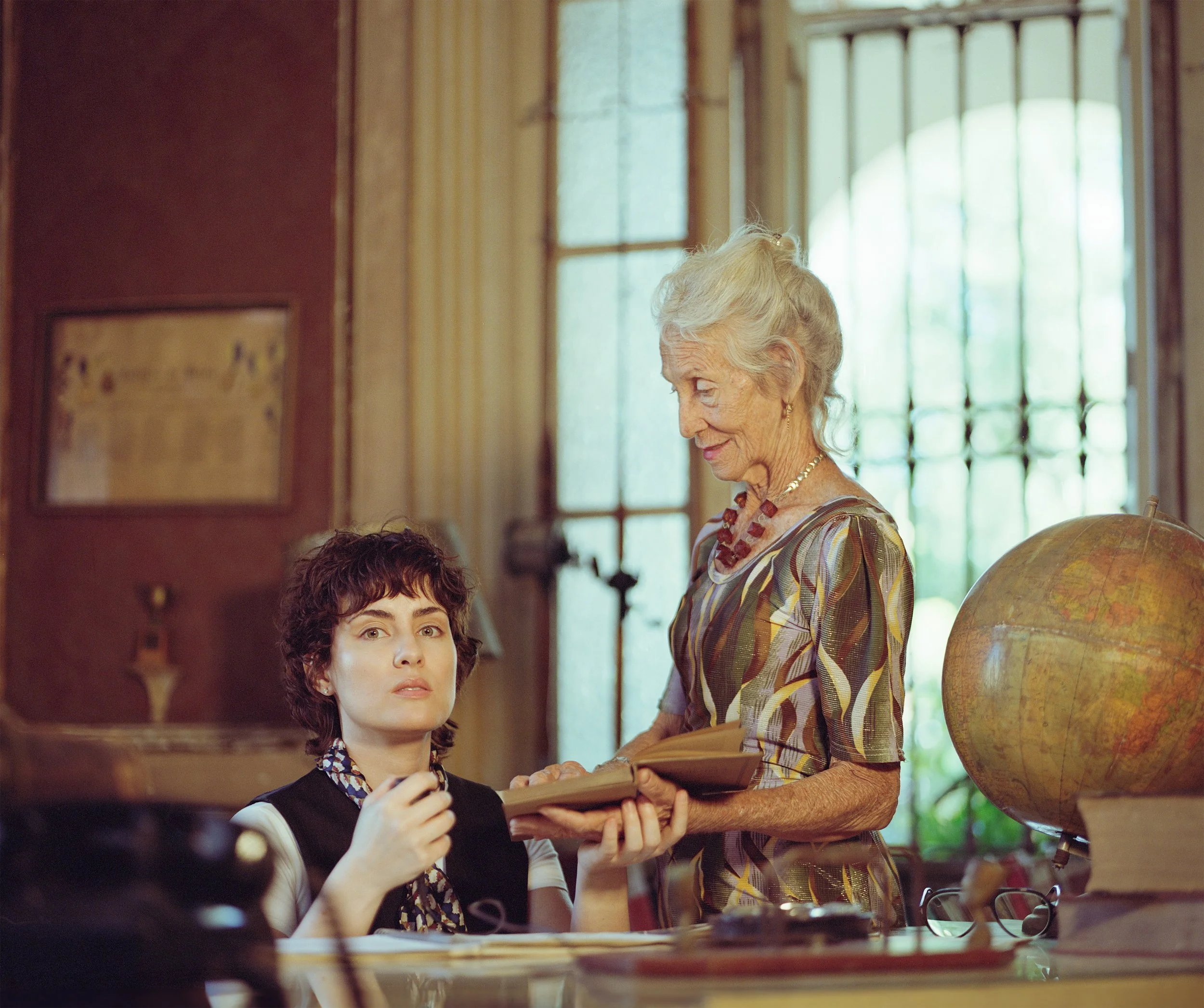
In the office of my grandmother Julia, feminist philosopher and poet, reading her latest publication

It's Christmas Eve, my grandfather René is not alone
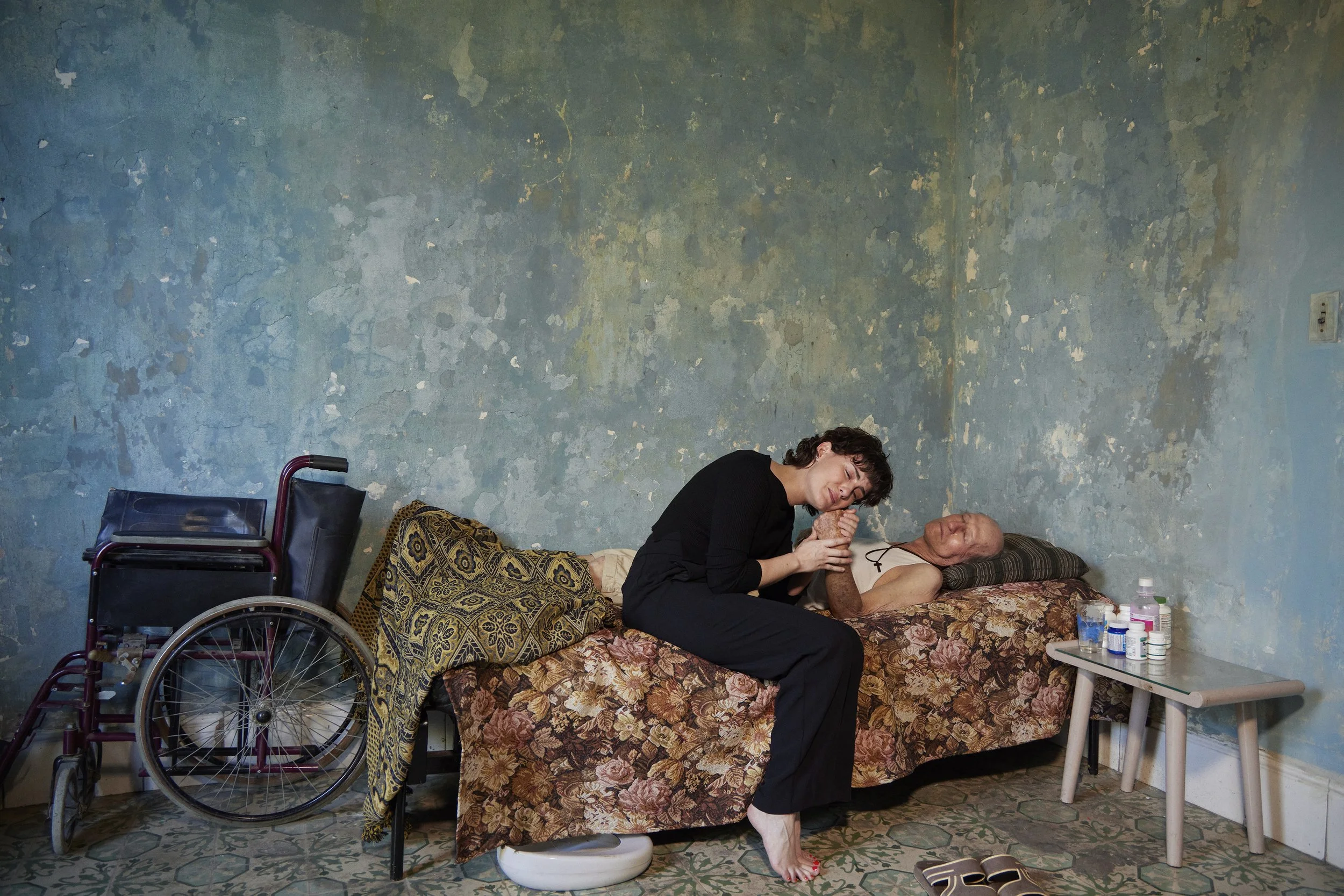
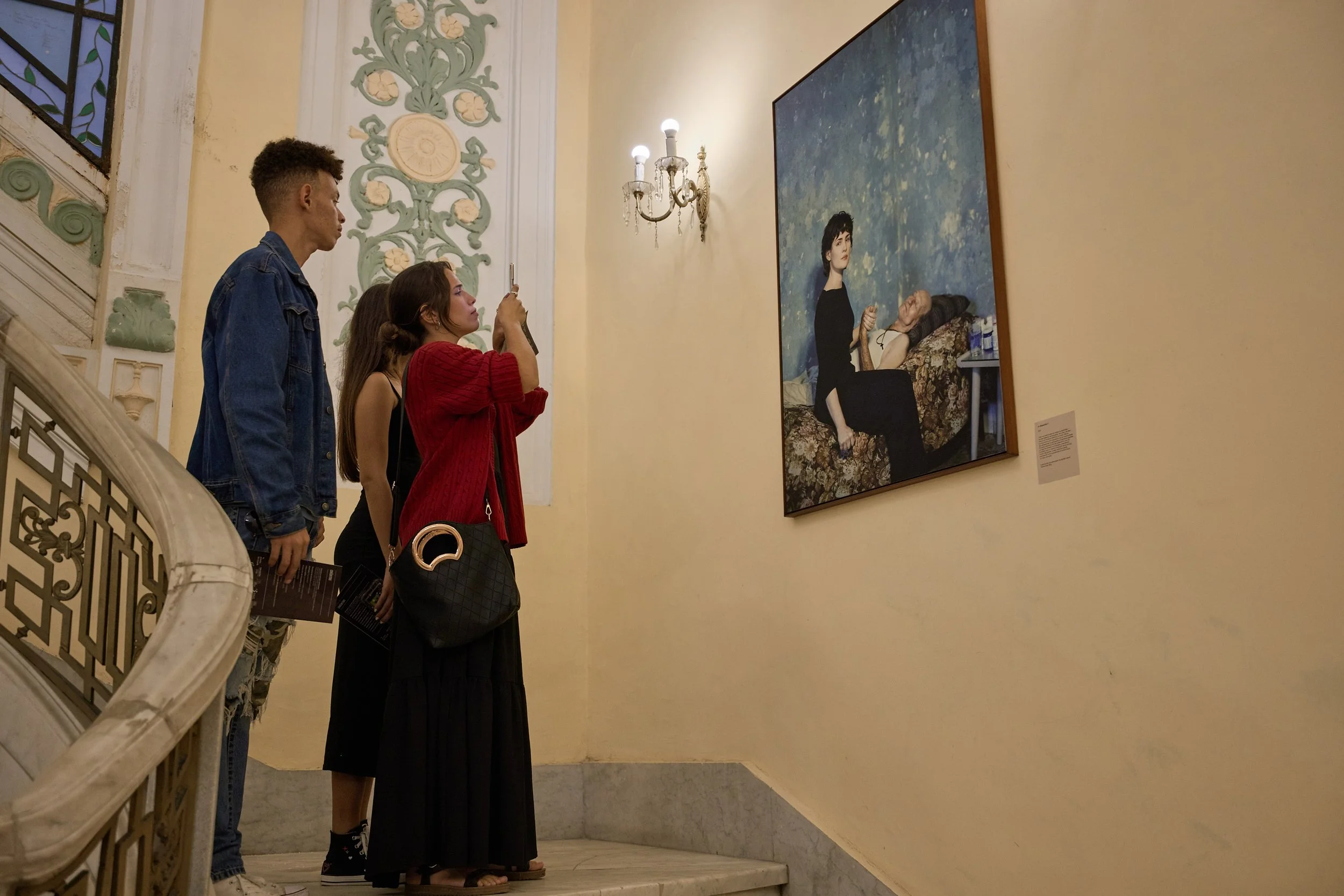
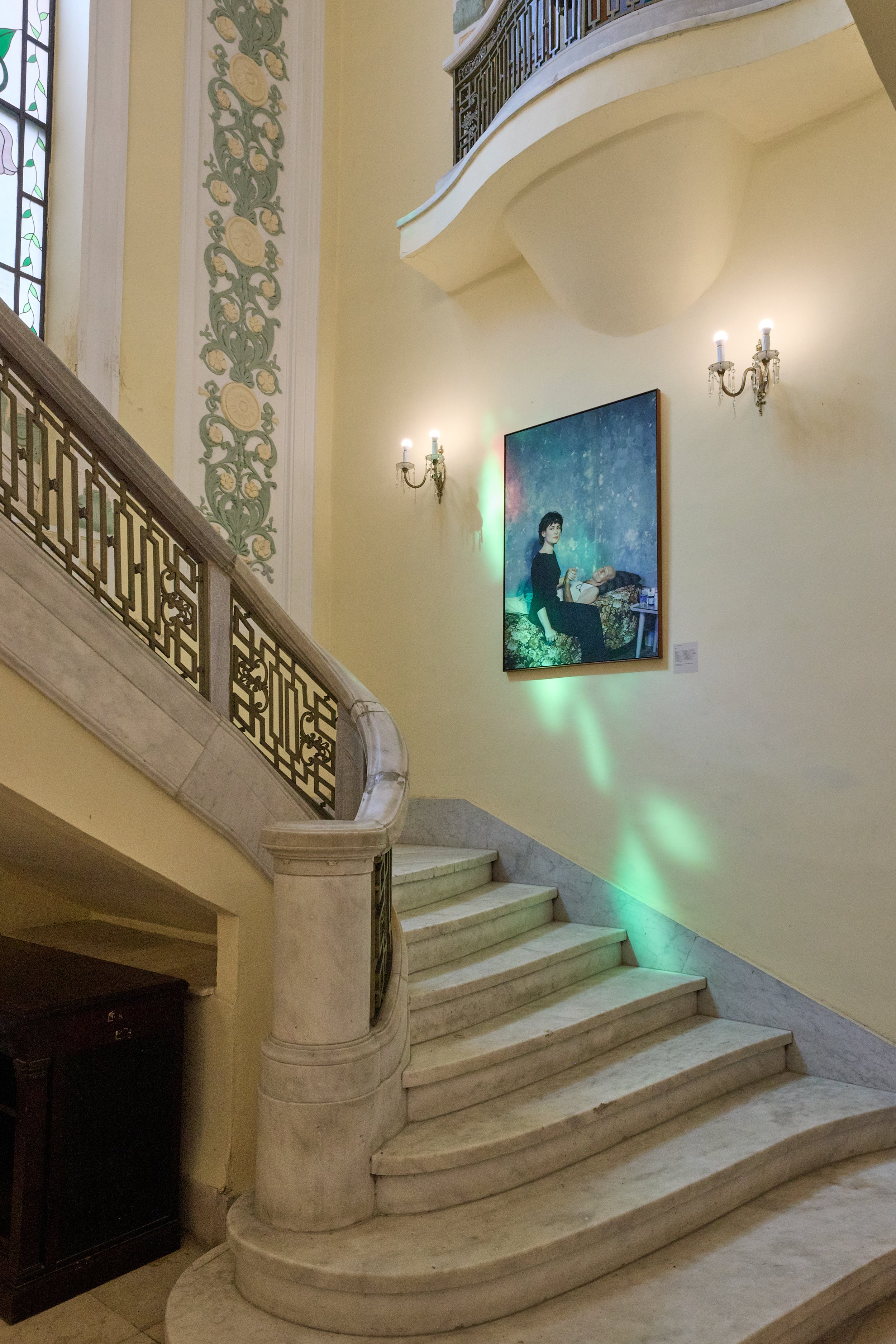
The Farewell I
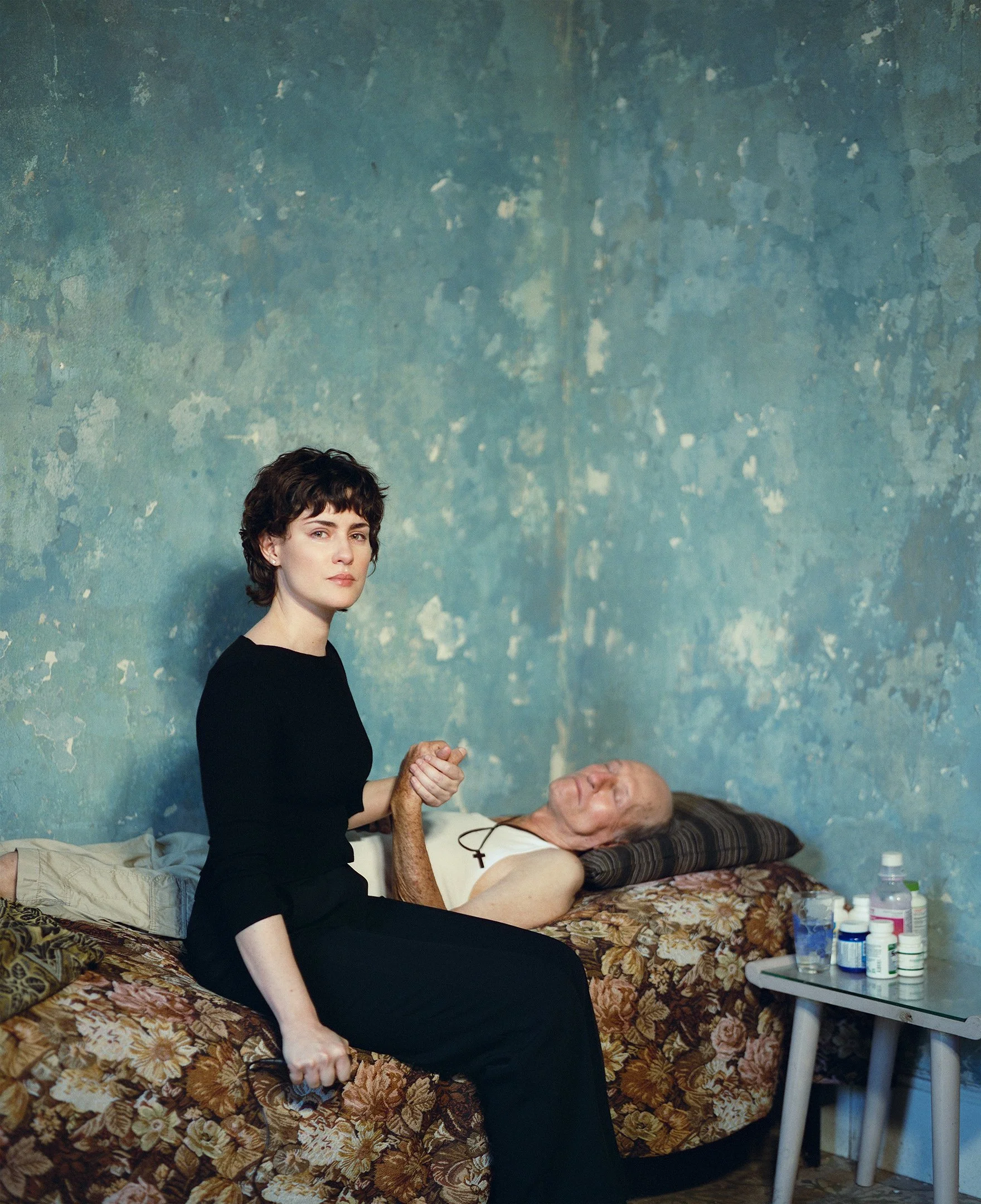
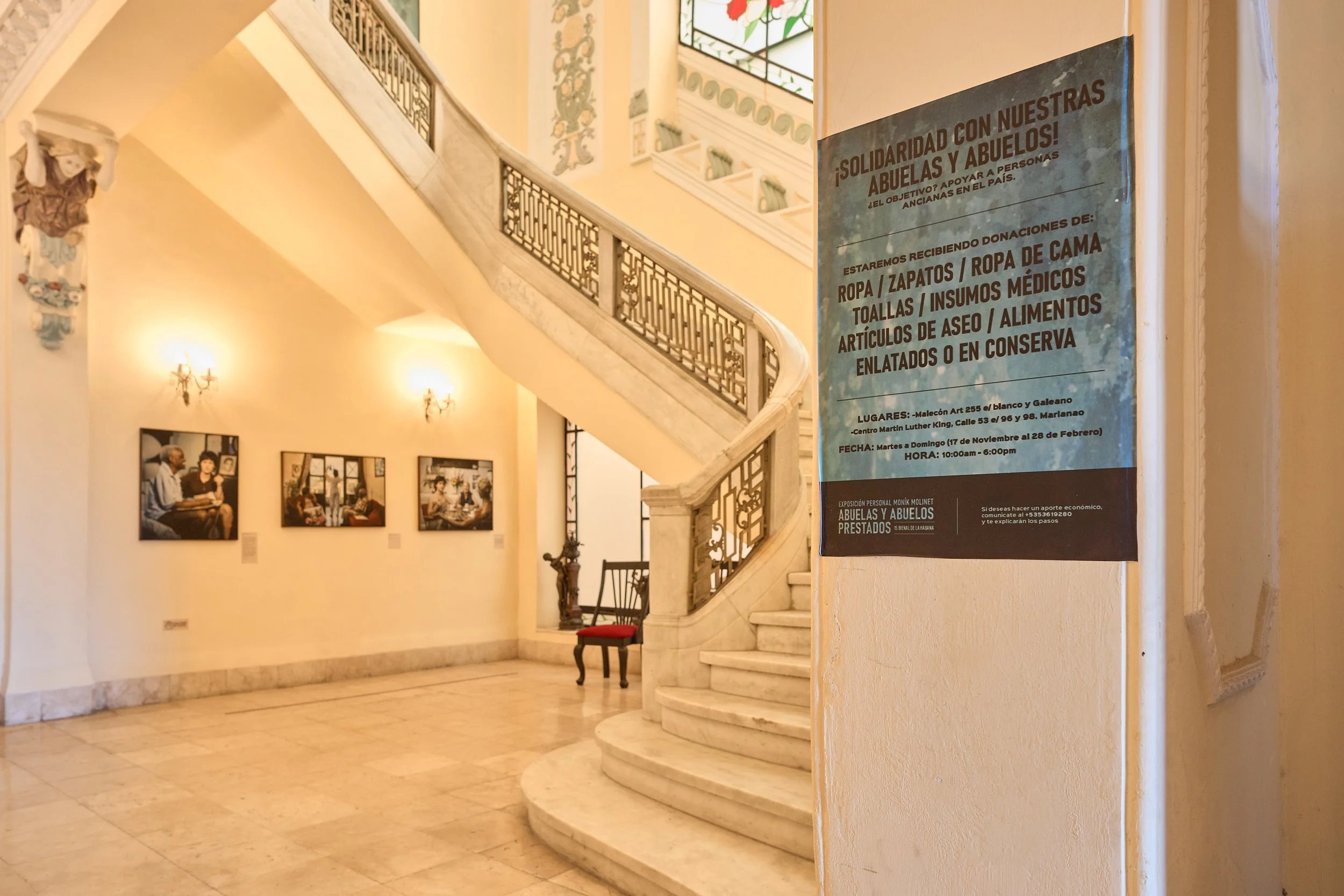
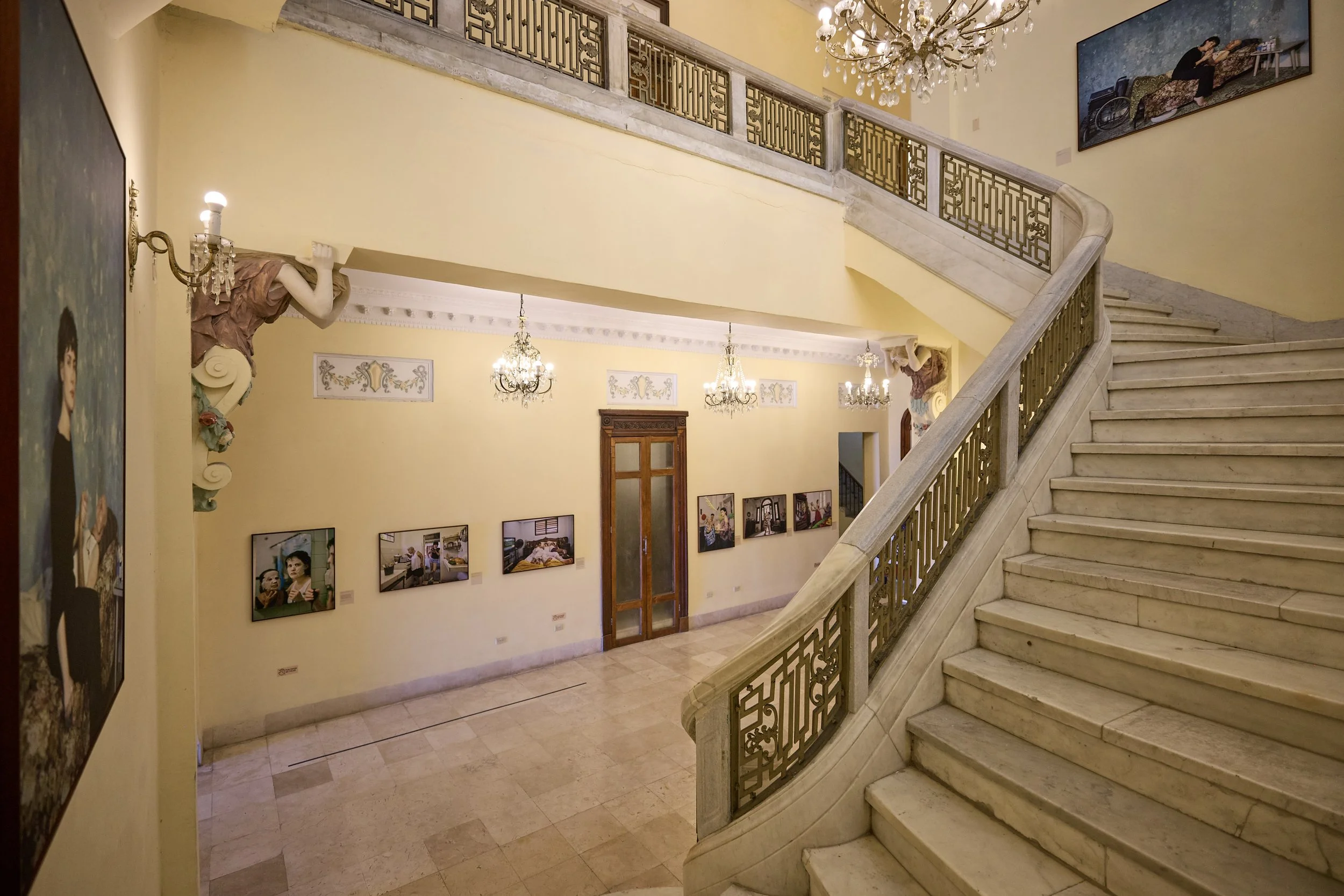
The Farewell II Create a memory that offers me the possibility of being present, accompanying, caring, and saying goodbye at the definitive moment: death. This is the only memory in the exhibition shown from two perspectives: the fourth wall and the Verfremdungseffekt. I did not want to place it at the end of the exhibition, but in a place of connection, on the staircase, understanding death as an intermediate transition within something much larger, a step towards another state, a cyclical situation that always leads you to a new beginning.
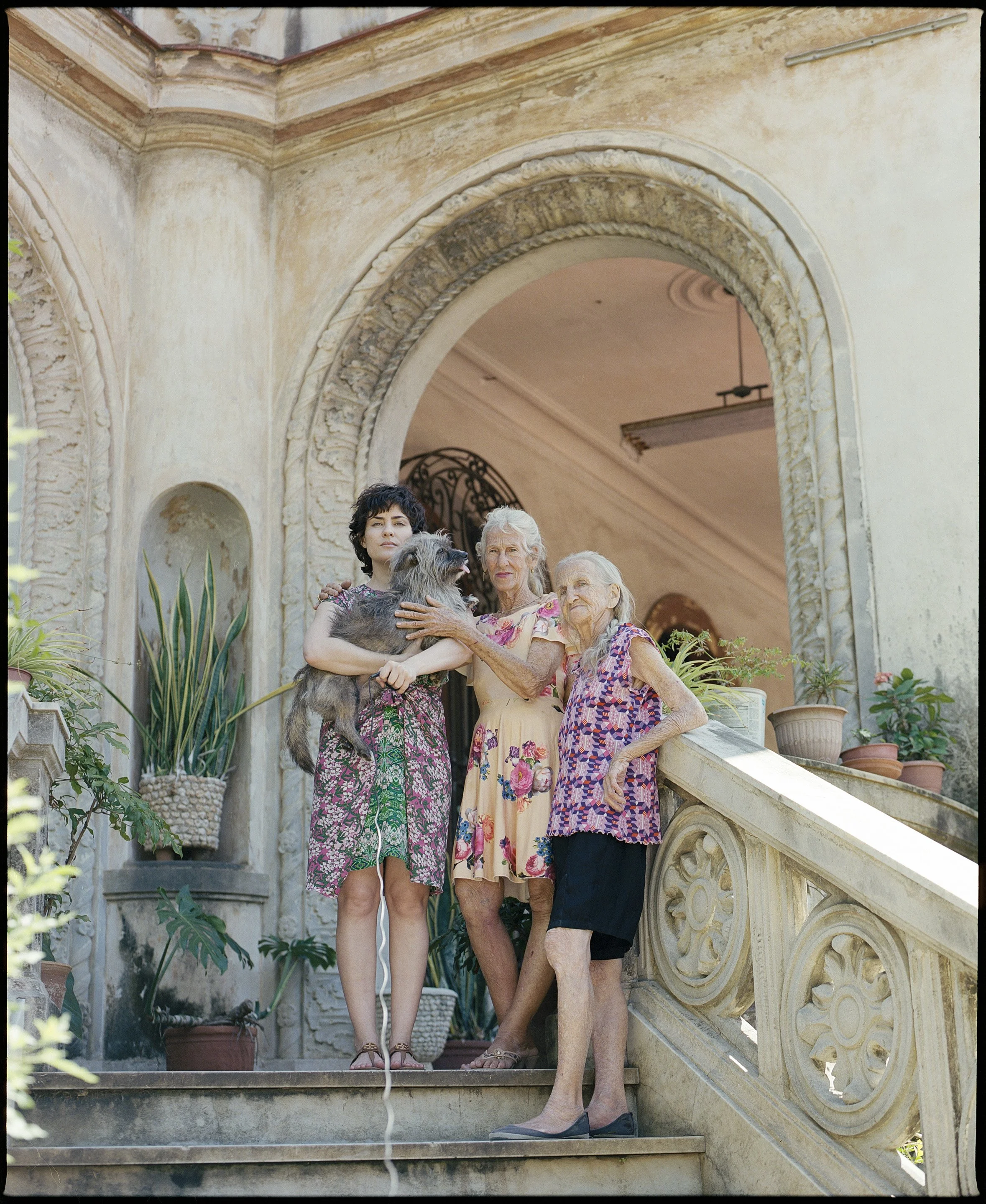
Borrowed Grandmothers
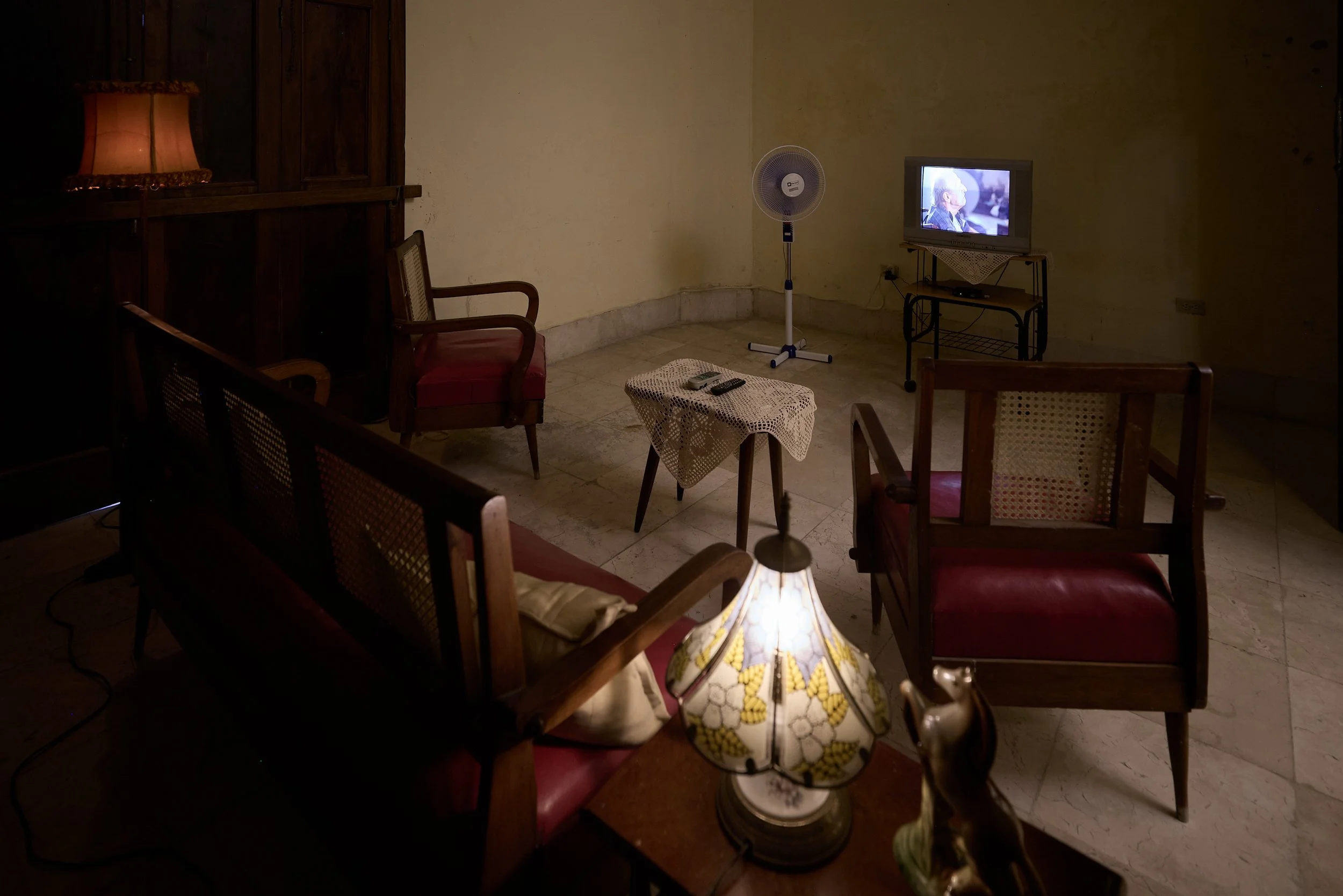
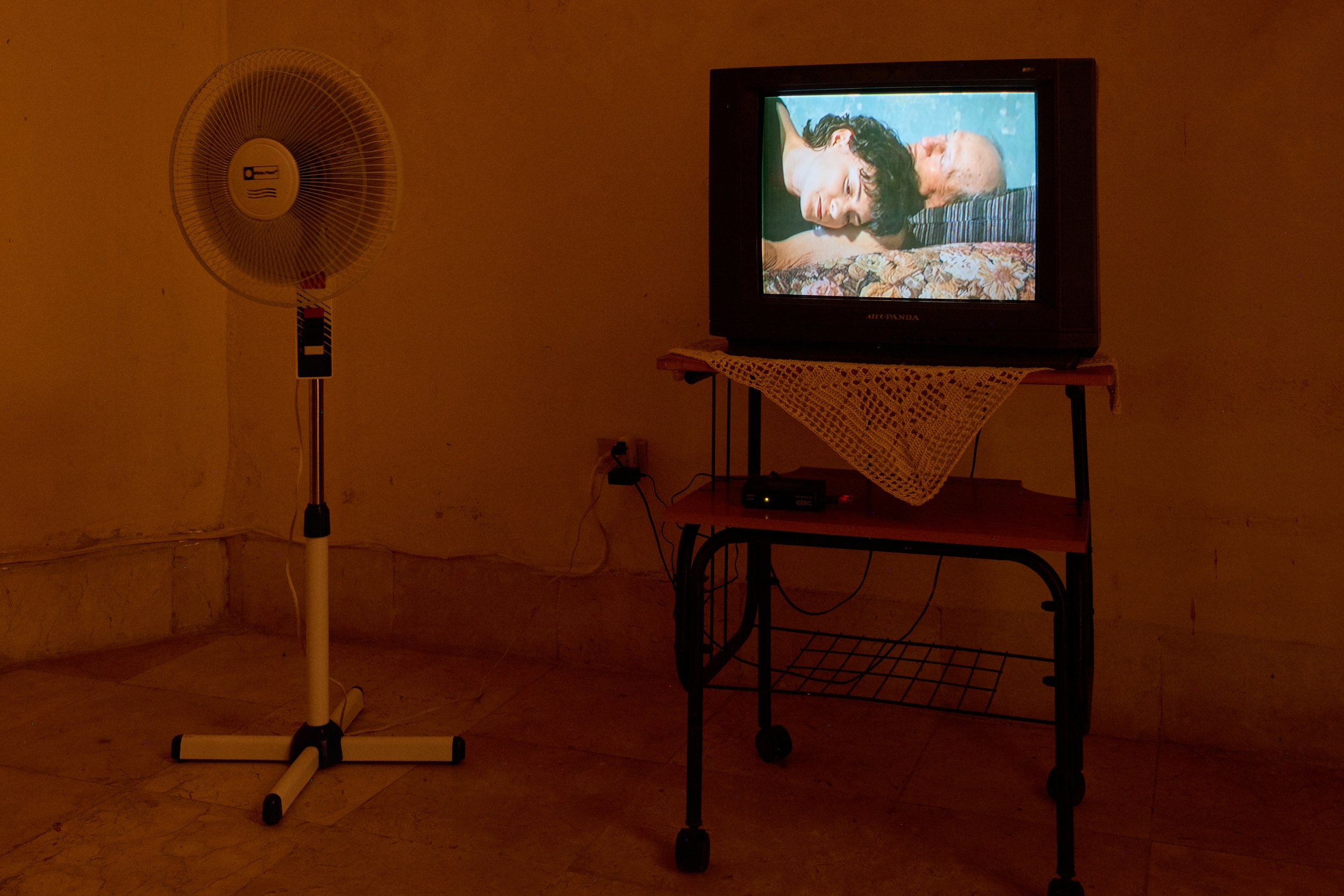
Video installation
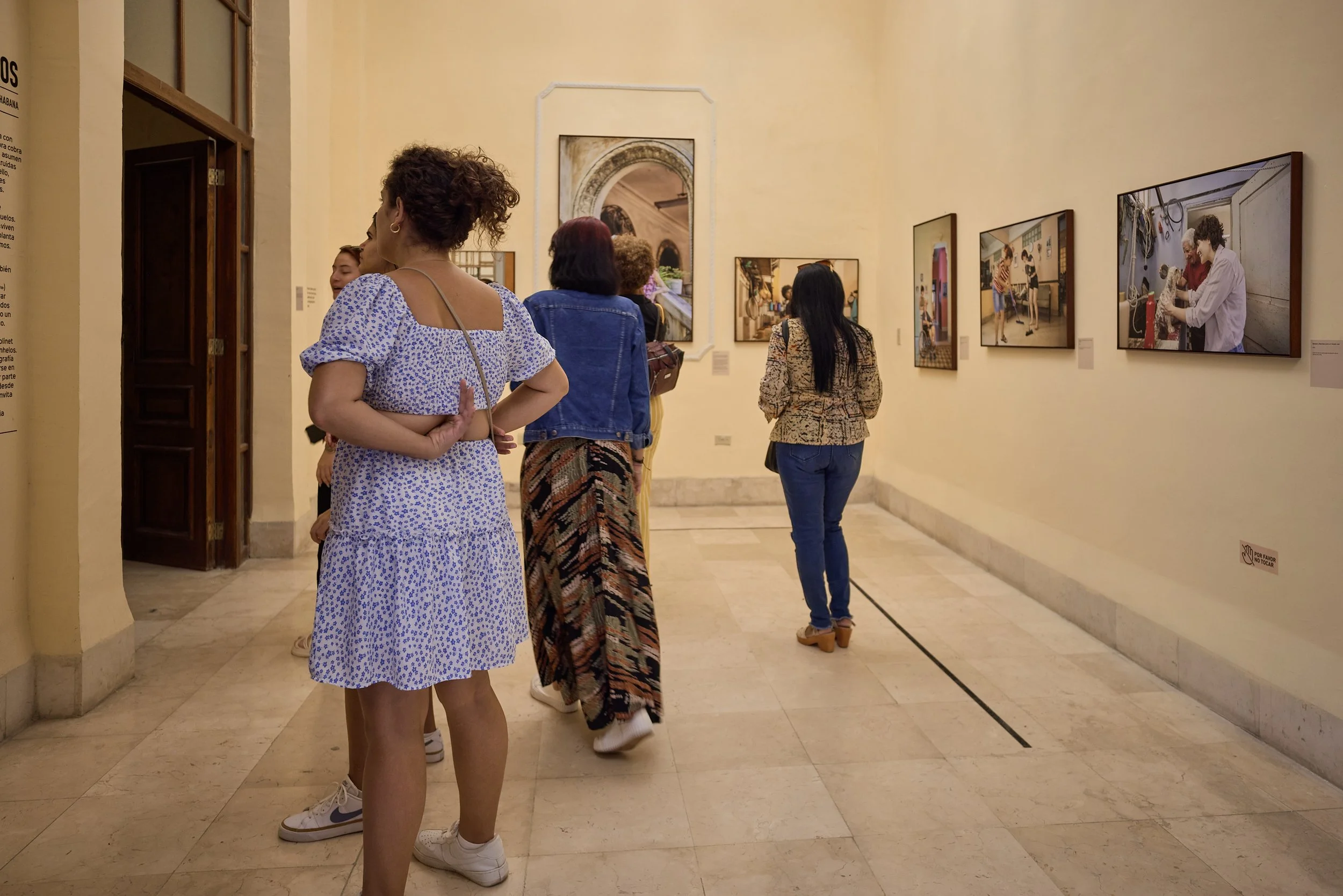
This video is a sample of nine other videos that were part of the exhibition at the 15th Havana Biennial 2025, part of a solo exhibition, where a room was dedicated to video installation. Visitors could enter a staged grandmother’s room and watch behind-the-scenes videos, thereby continuing to generate a non-existent memory through various artistic disciplines, including photography, installation, and video, all combined as a form of performance.
opening